Namibia 2015
Outing 3b: Self-guided tour of Swakopmund
Raymond and I cadged a lift on the bus heading for Walvis Bay for the bird and seal tour. We were dropped off near Kucki's Pub and started our walk from there. Kobus had given us a run down of the important buildings on the previous day when the bus was heading to the train. This gave us some idea where to look for things (I will update captions as I find out what the buildings are or were - this page was very useful). We started our walk by heading in a north easterly direction, with the old station as our first target. What caught our eye very early on in the walk was this strongly backlit church.
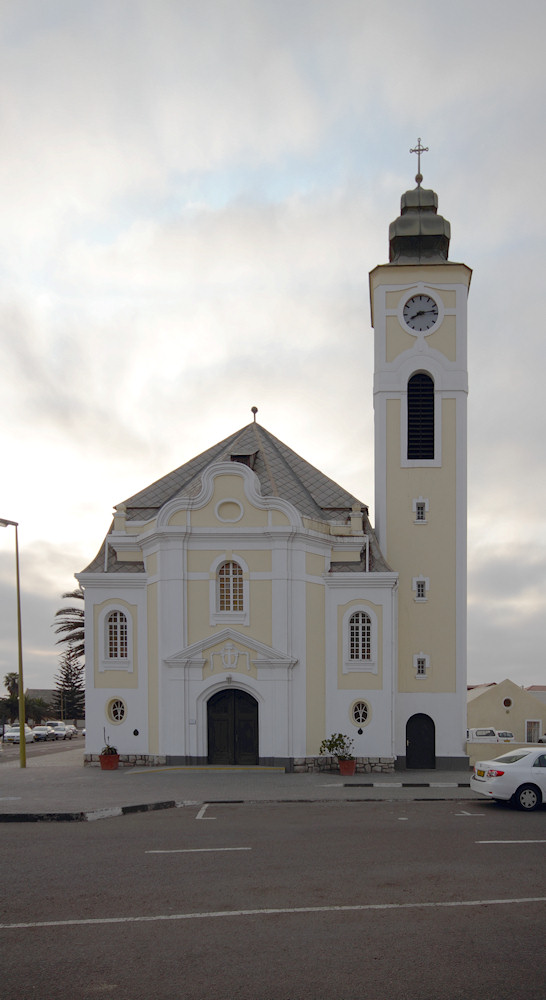
Swakopmund: Evangelical Lutheran church (1911).
(Perspective correction has been applied to this picture.)
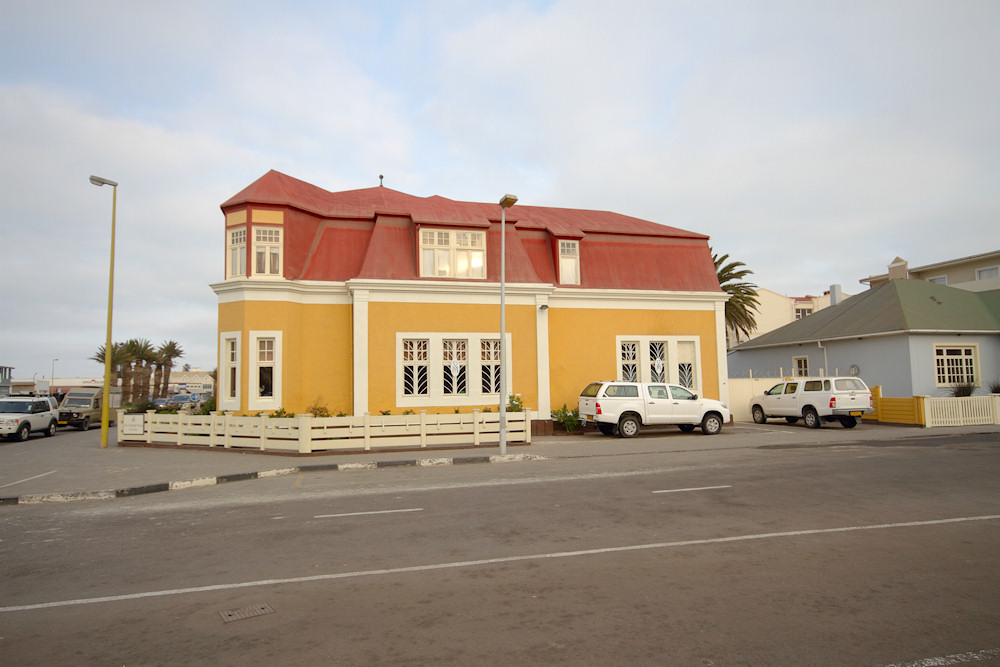
Swakopmund: Schwietering house (1910). The home and consulting room of the first medical practitioner in Swakopmund.
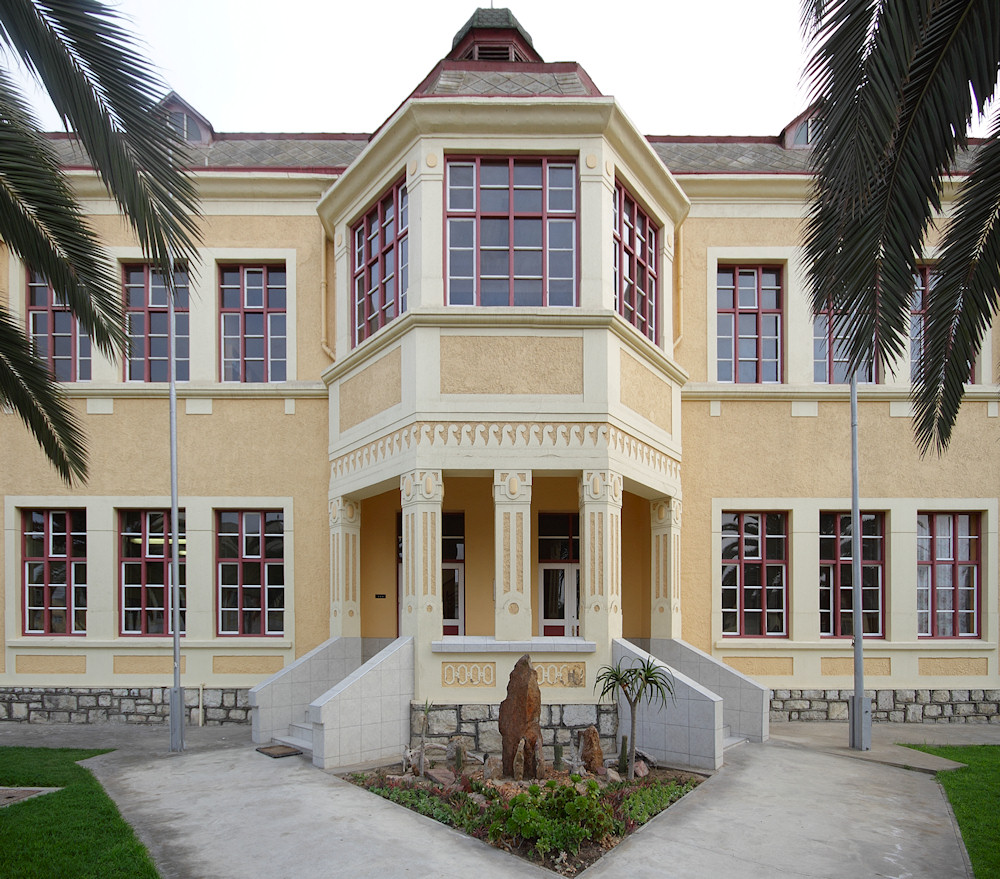
Swakopmund: German School (1913)
(Perspective correction has been applied to this picture.)
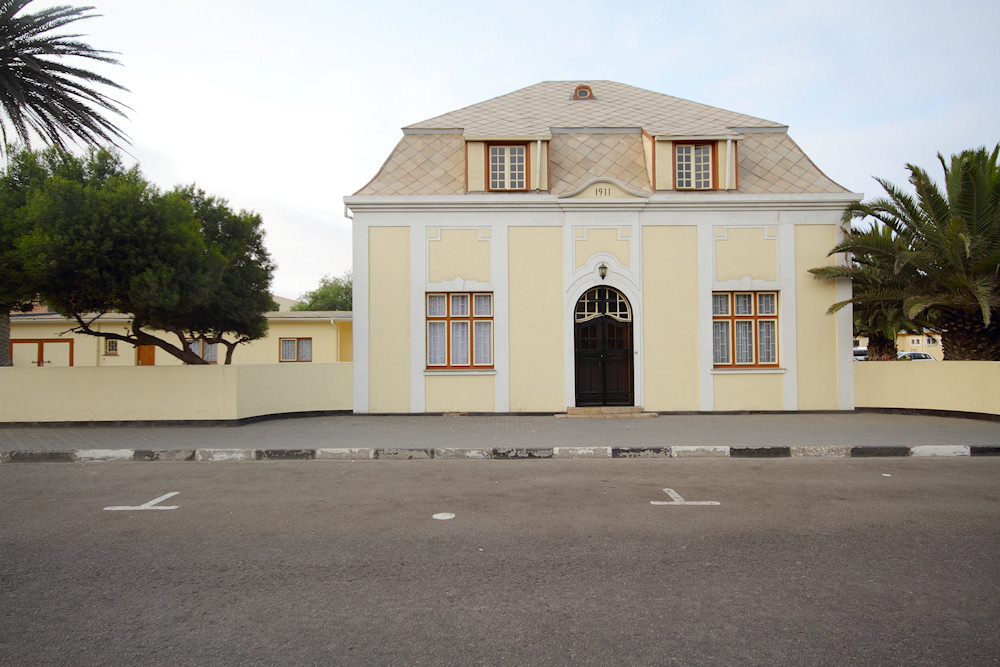
Swakopmund: Parsonage - Evangelical Lutheran Church (1911)
The old railway station has been converted into a major hotel in Swakopmund. Rail travel is relatively unimportant in Namibia, so there is no real need for stations. This is one of the reasons why our train had to park at a siding, rather than at the station.
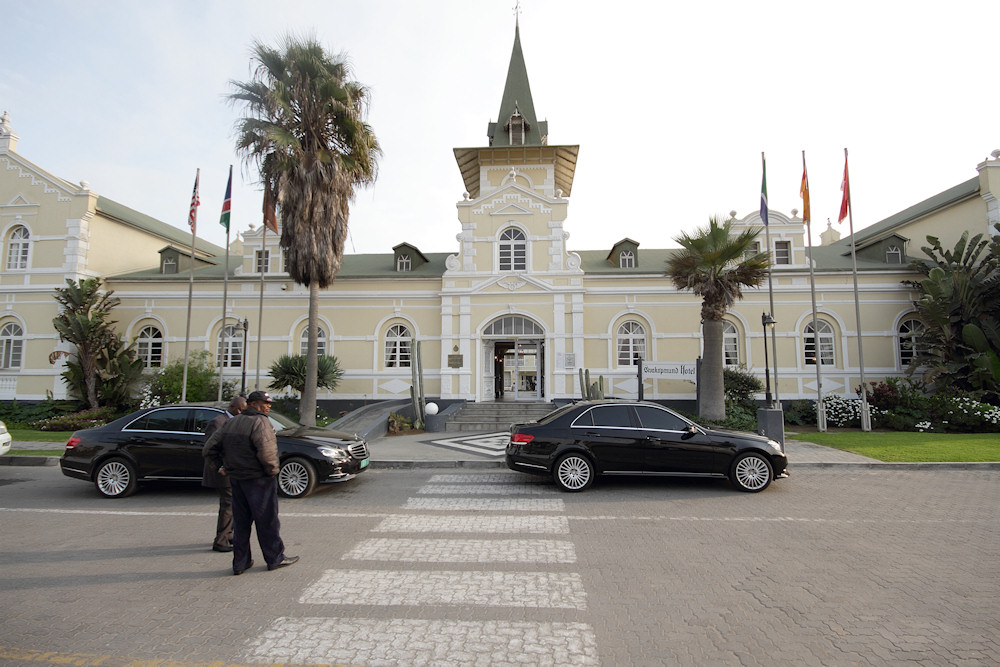
Swakopmund: Old railway station (1901)
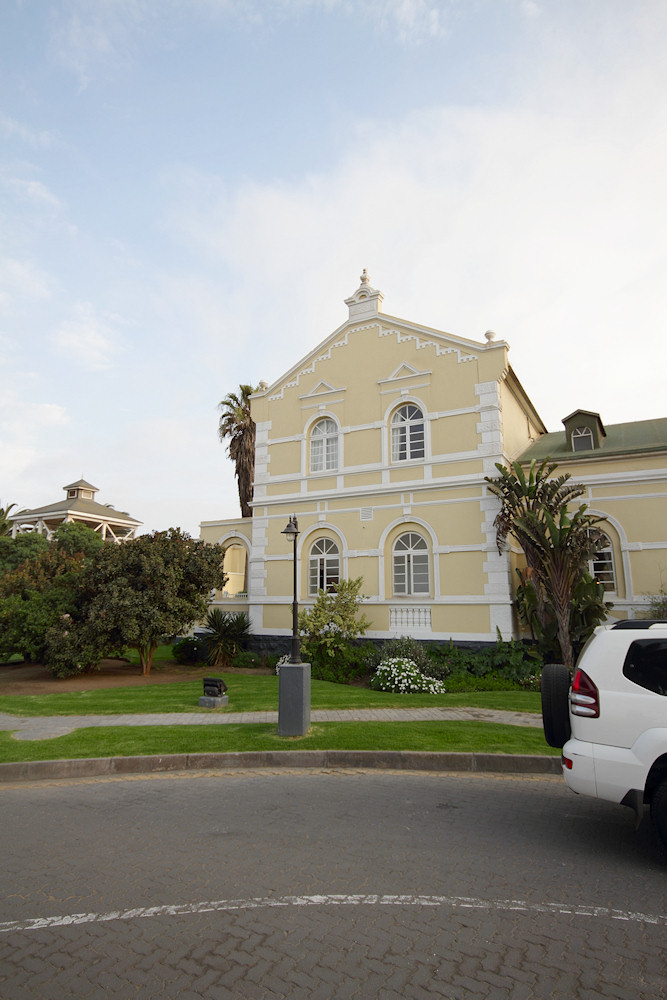
Swakopmund: Old railway station (1901)
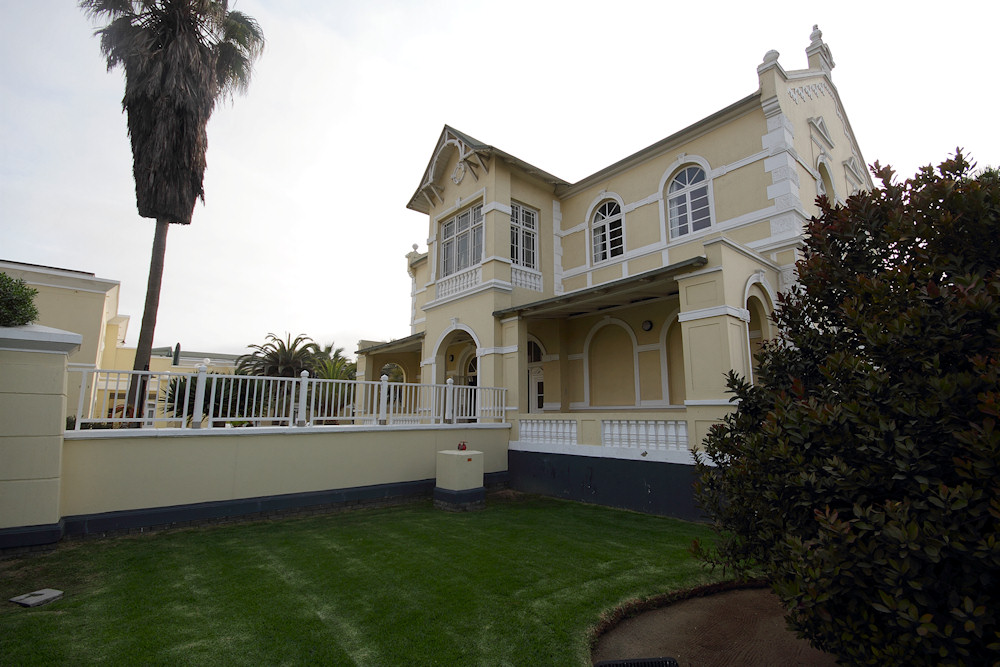
Swakopmund: Old railway station (1901)
From the station we headed towards the sea.
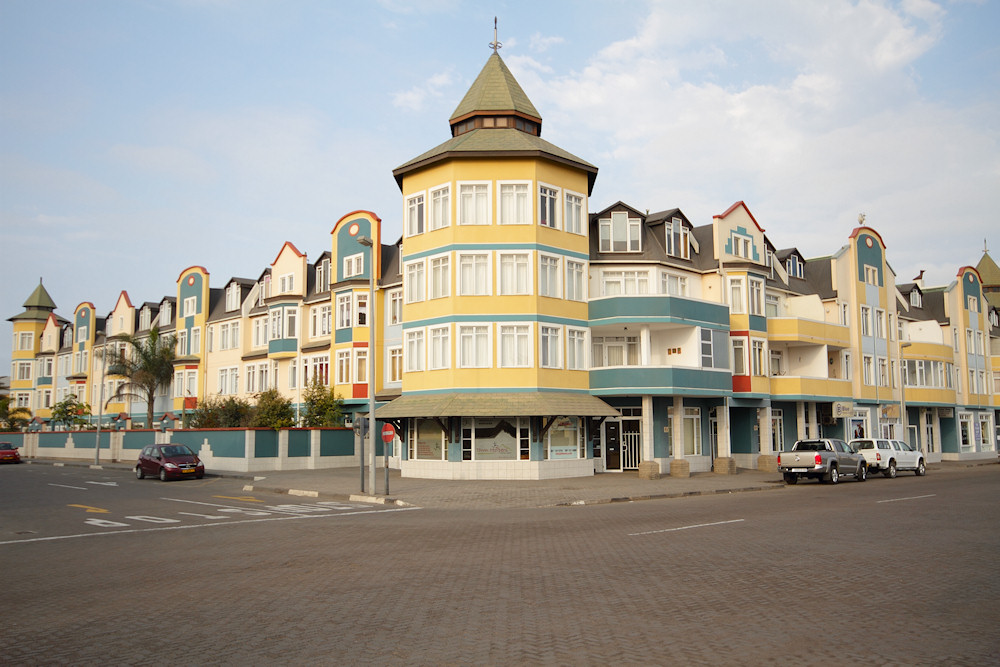
Swakopmund: A more modern building with overtones of the old German architecture.
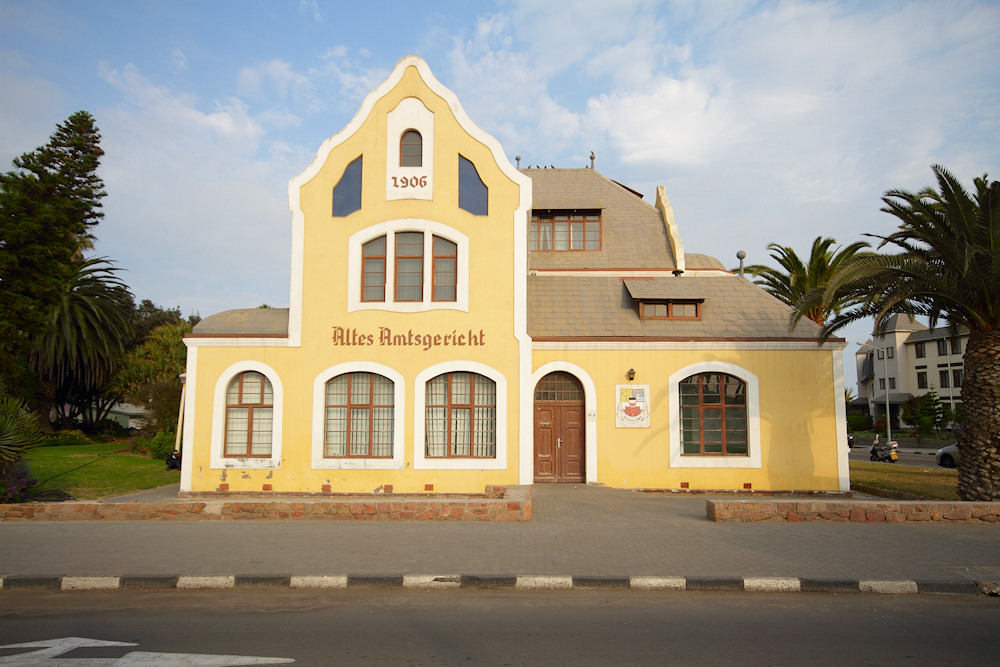
Swakopmund: Magistrate's Court (1908)
What struck us was how neat and clean this town was - totally unexpected in Africa! Also, we had the town pretty much to ourselves until around 10:00 - very laid back.
A very unusual sighting was this flock of Helmeted Guineafowl close to the beach. One wonders how they got to this place in the desert. It is many, many miles from any suitable habitat for them.
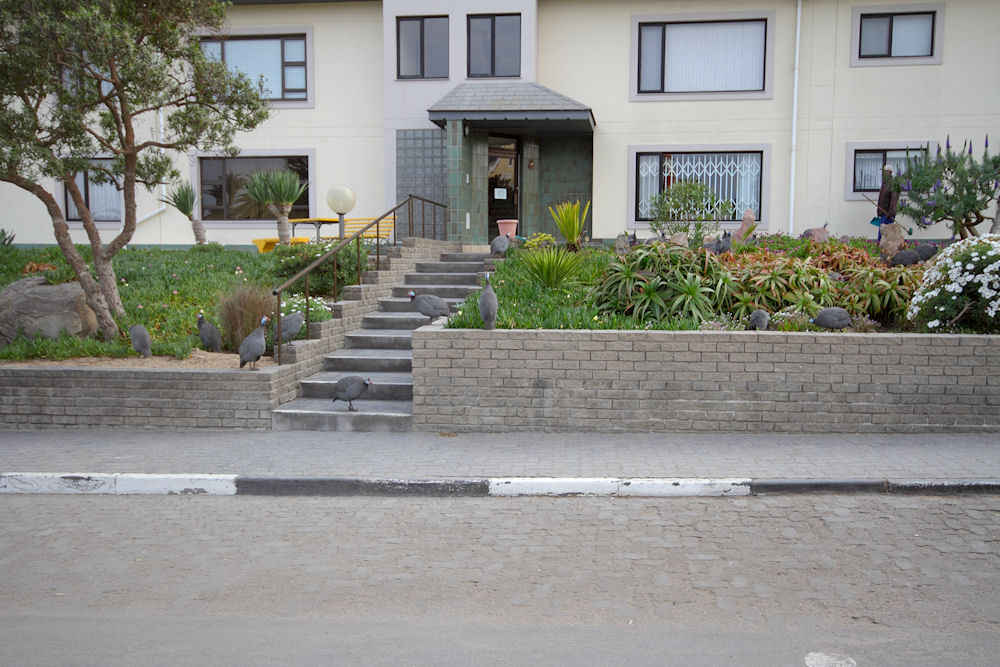
Swakopmund: A flock of guineafowl foraging in the garden of a block of flats.
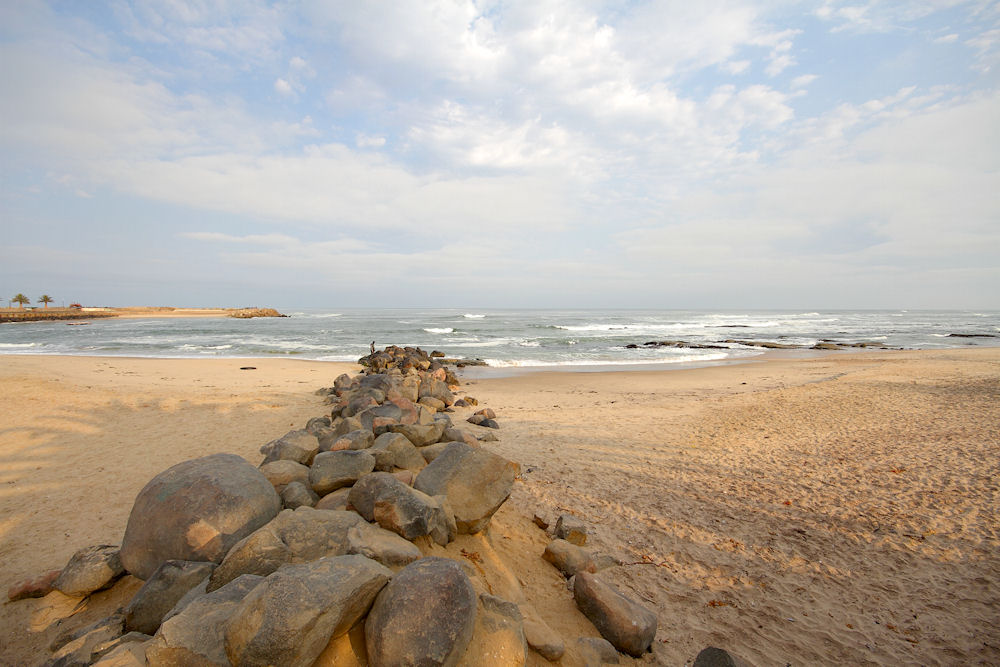
Swakopmund: We finally reached the beach...
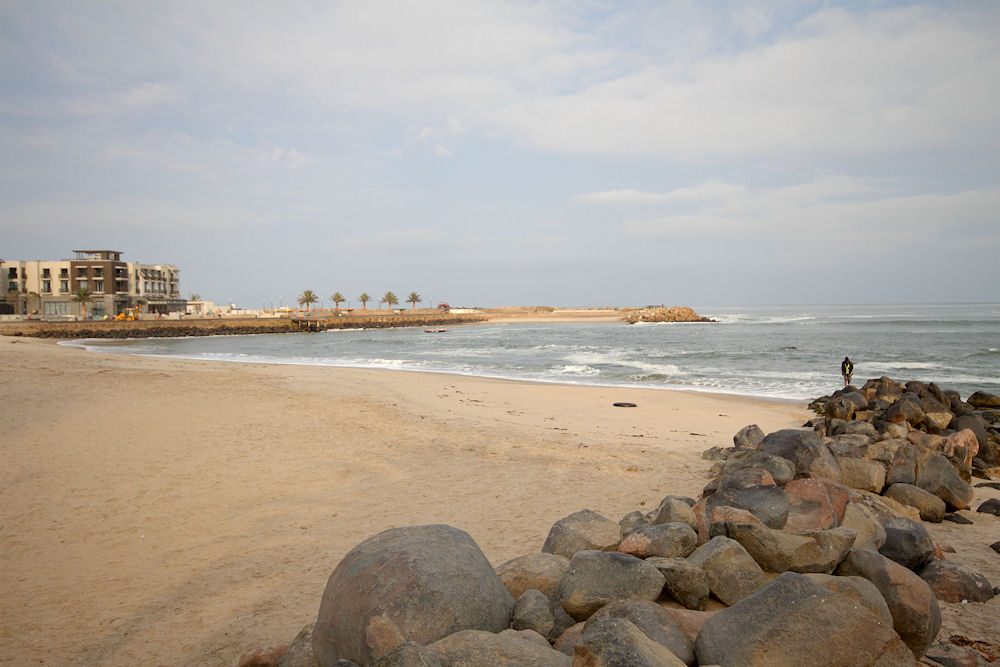
Swakopmund: A view of the mole and the promenade on it.
The mole was an attempt by the Germans to build a safe harbour for Swakopmund at the beginning of the 20th century. However, this failed due to excessive silting from the strong currents. During our tour, the promenade was closed to the public as construction workers were busy renovating the hotel.
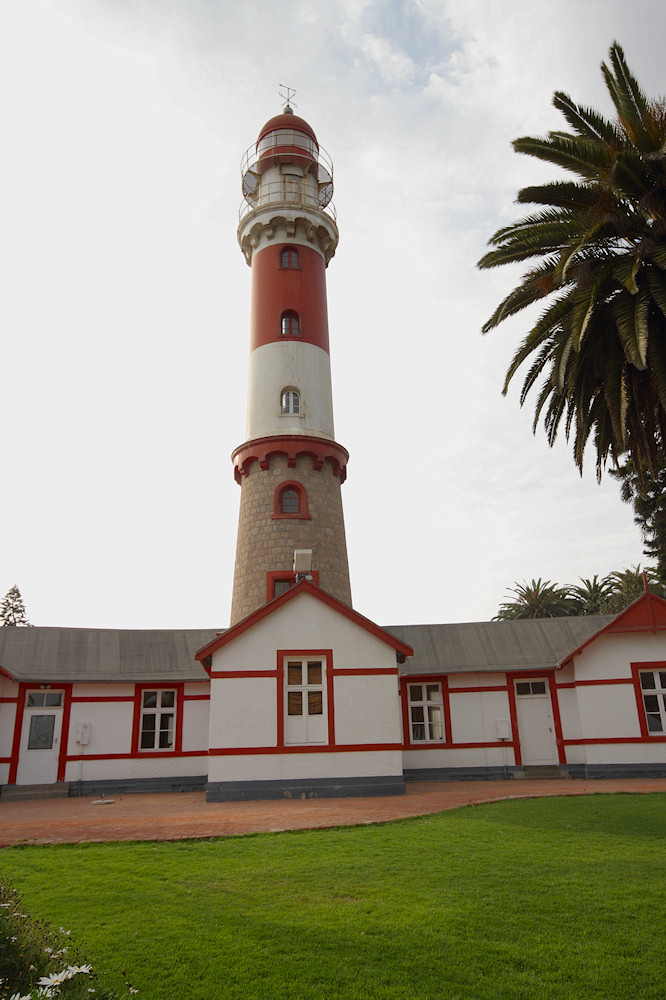
Swakopmund: The old Lighthouse (1903)
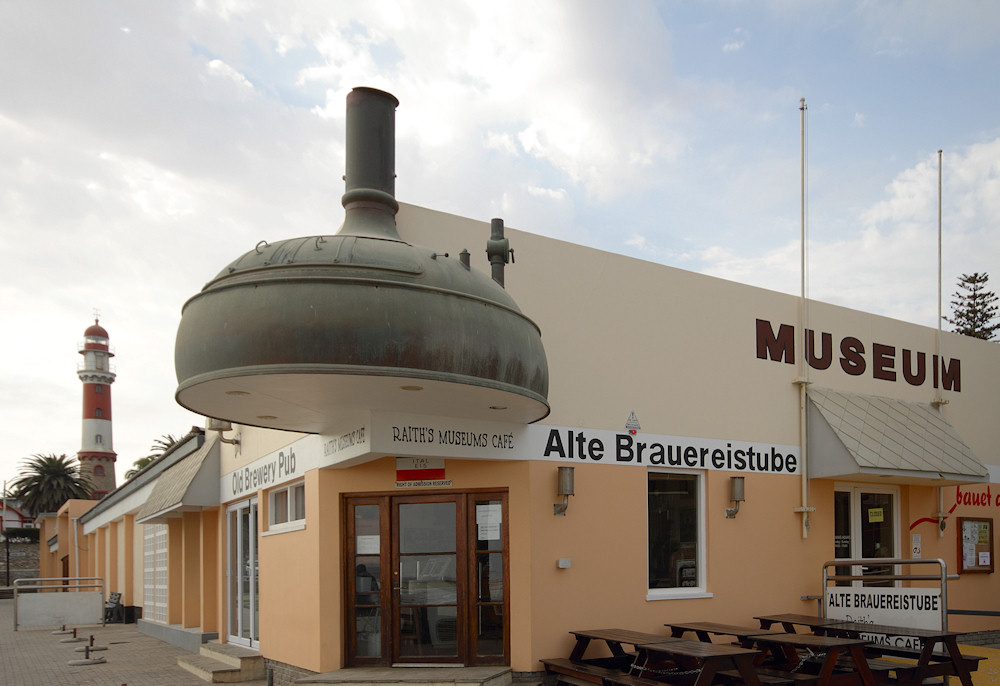
Swakopmund: The entrance to the museum, and the museum cafe. The building was the old customs building. The mash tun above the cafe's door was probably from the old Hansa brewery.
(Perspective correction has been applied to this picture.)
From here, we wanted to head south along the beach towards the pier, but as mentioned we were not able to use the promenade. A gentleman was kind enough to point out a route to the beach between two beach cottages. This route unfortunately took us directly through the curio sellers' stalls - and these guys were persistent and insistent! They kept with us all the way onto the beach...
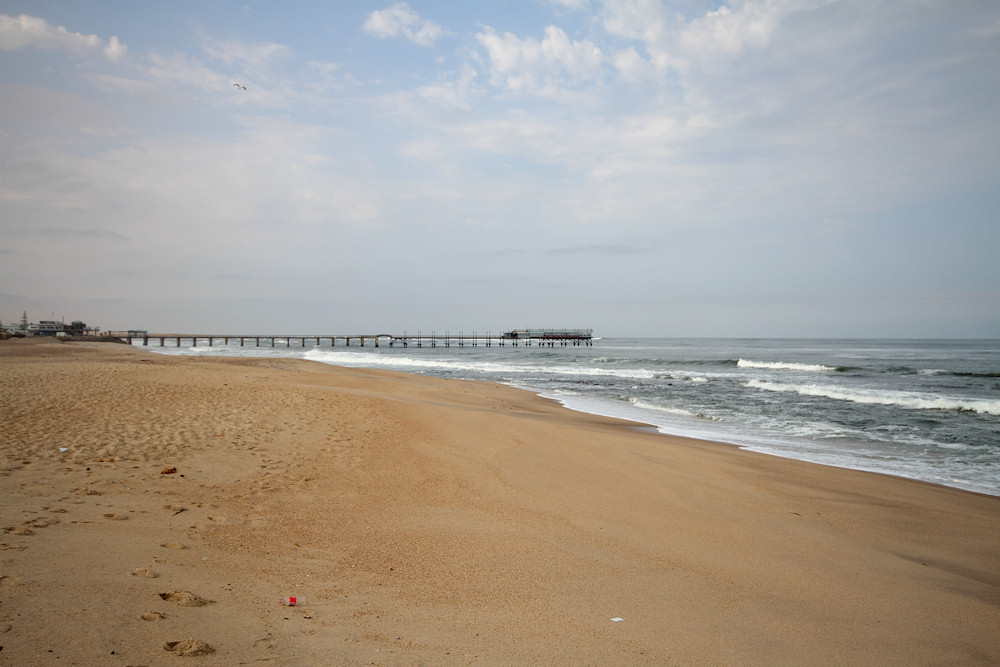
Swakopmund: On the beach, looking towards the pier
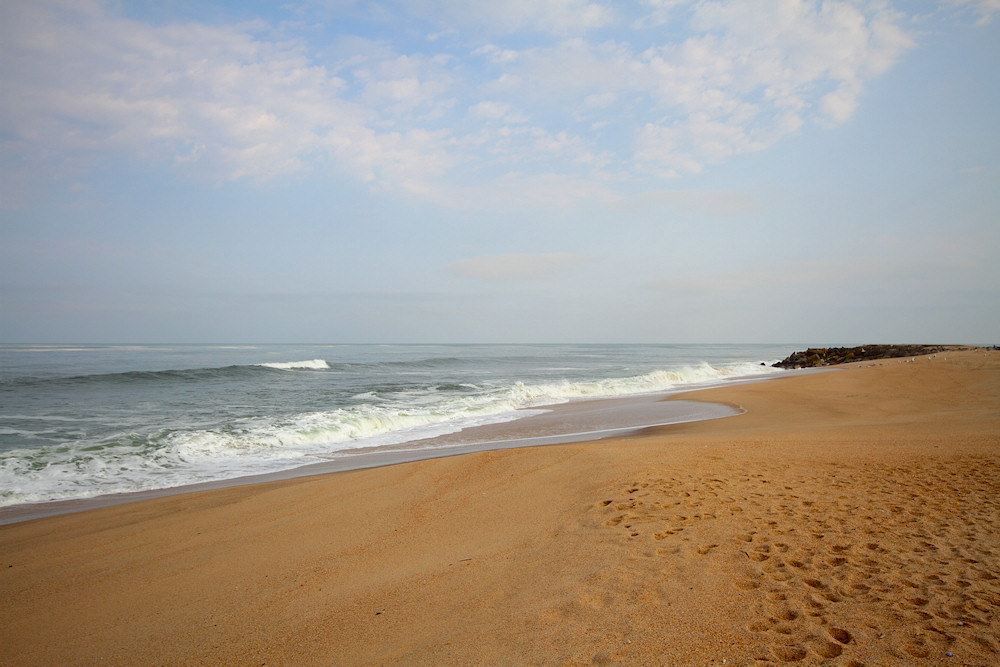
Swakopmund: On the beach, looking northwards
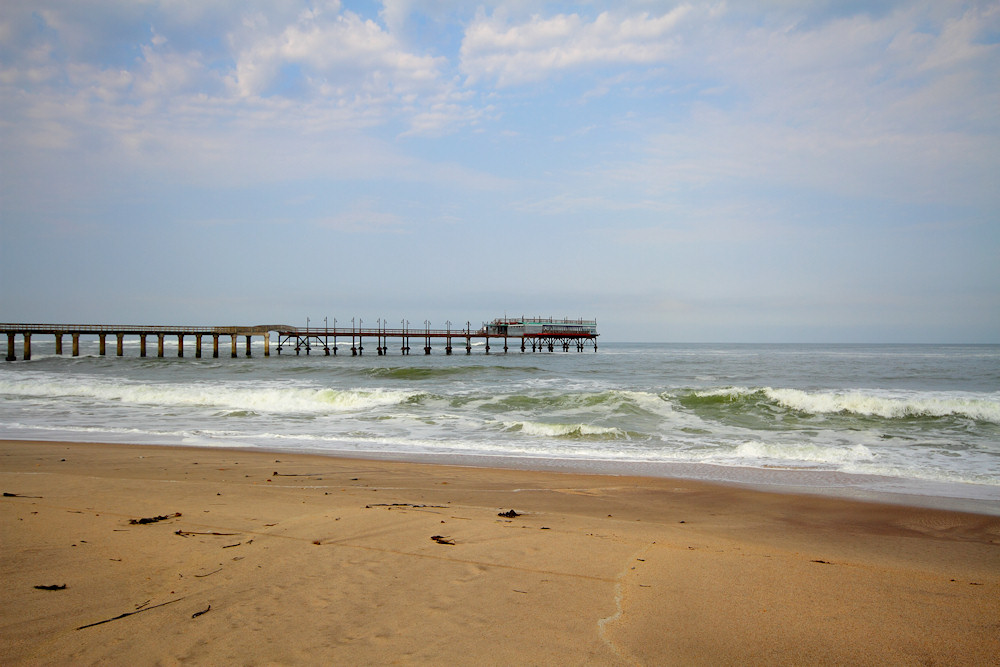
Swakopmund: On the beach, closer to the pier
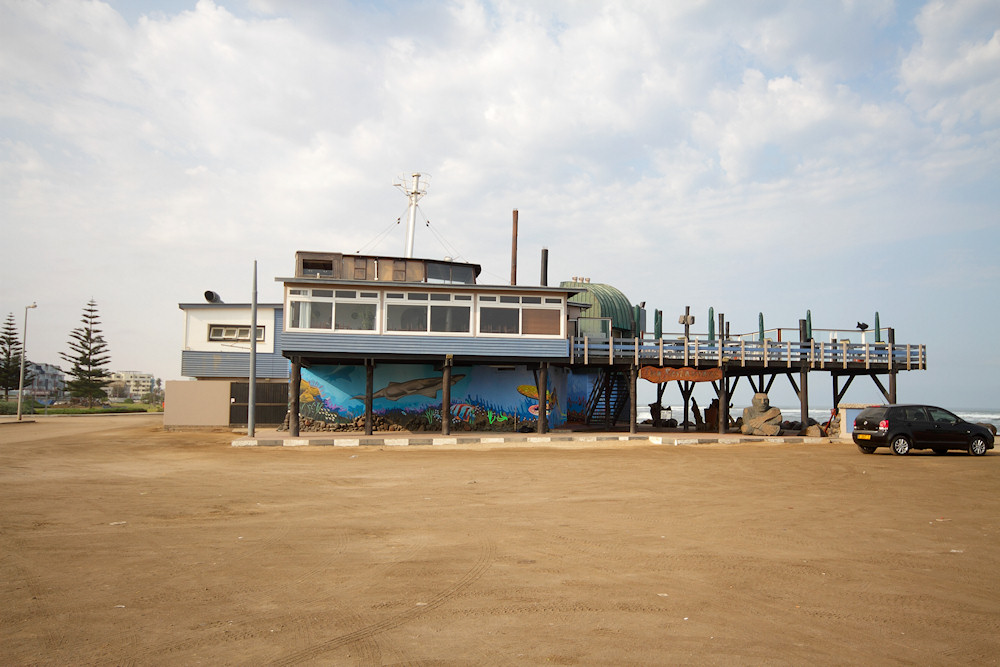
Swakopmund: The Tug Restaurant at the start of the pier
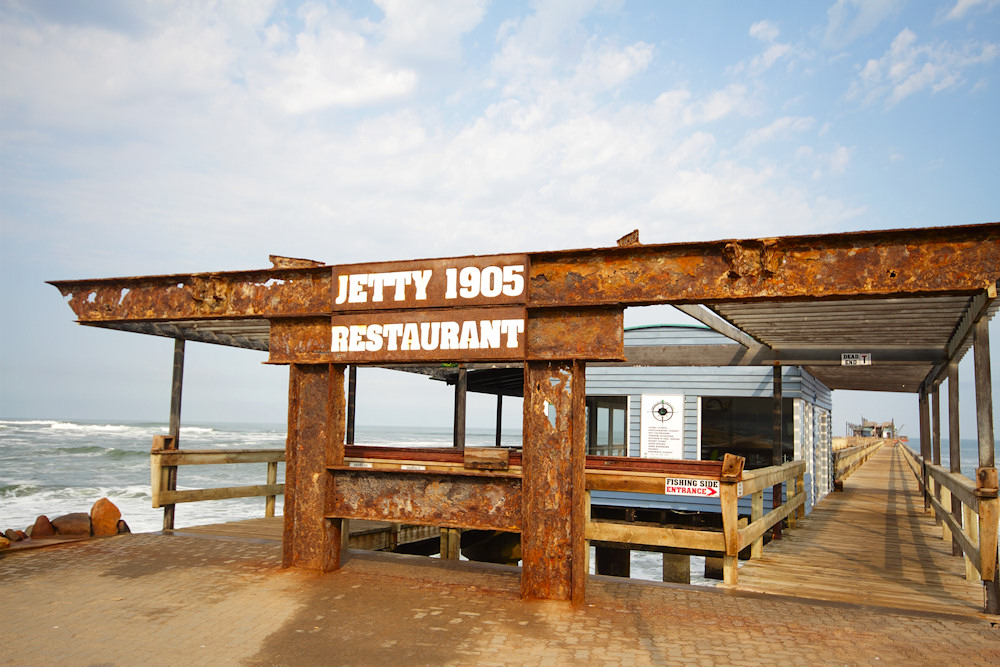
Swakopmund: The entrance to the pier and the Jetty 1905 Restaurant
The pier was built when the German authorities realised the silting of the mole was a too big a problem. The history of the pier is given in more detail on a webpage of the Jetty 1905 Restaurant.
