Blogs
Lightning Strike
Introduction
On the 29 January 2024, our house got struck by lightning. While this in itself might not be a strange occurrence, the way the electricity travelled during the strike was rather unusual as it did not follow what we are led to believe.
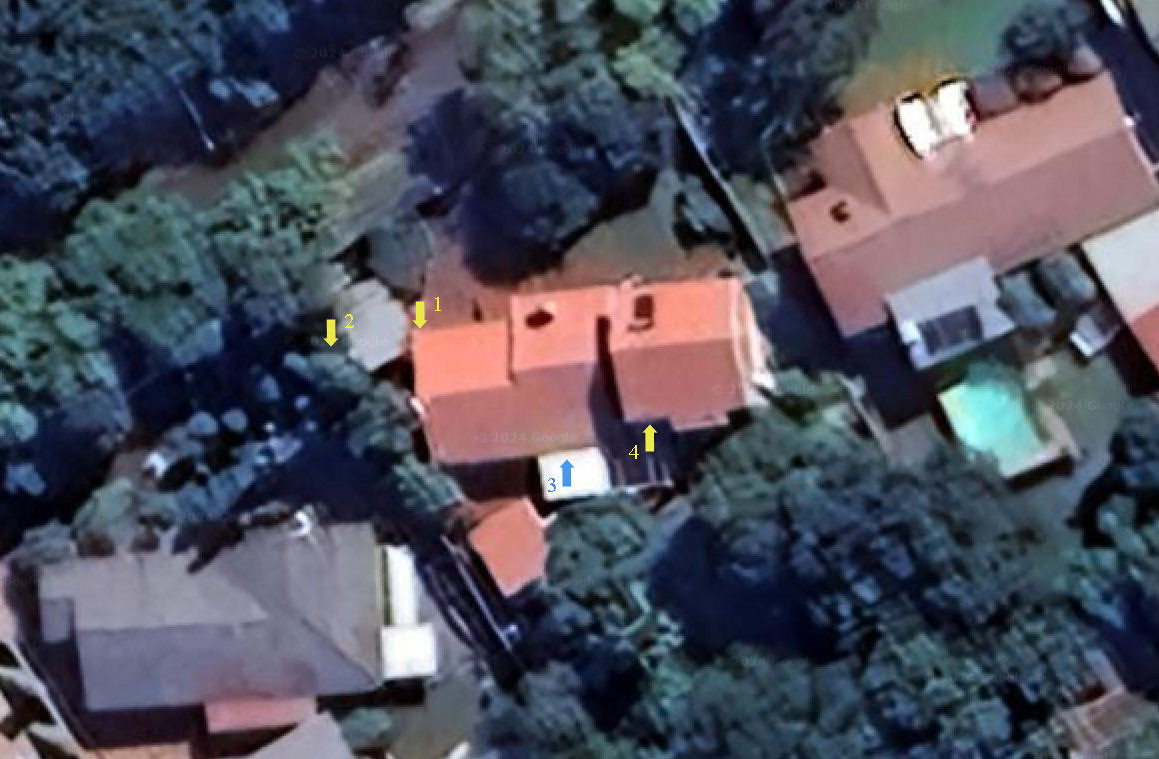
Fig 1: Layout of house from Google maps
In Fig 1, the strike took place at the point marked 1, which is on the right hand end of the gutter in the pic below.
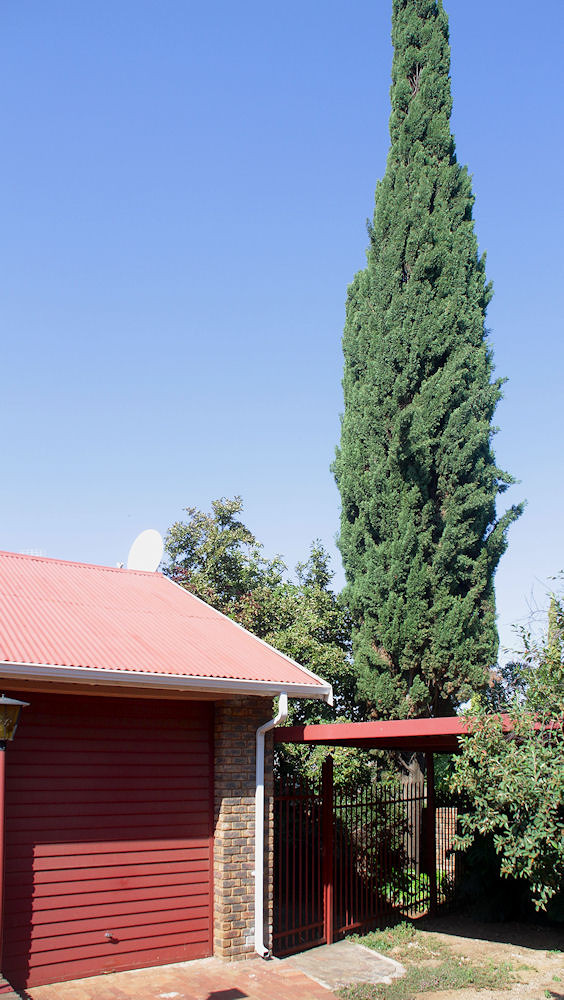
The area where the strike took place
Now we are always told that lightning will strike at the highest point in the vicinity of where it is making landfall. If you look at the picture above, you will notice firstly that the cypress tree on the right side (marked 2 in Fig 1) is more than four times higher than the gutter. Even the satellite dish is higher, yet neither the tree nor the satellite dish showed any signs of damage.
Update I was going to write this in chronological order, but a late finding (4 April 2024) has led me to rethink what actually happened during the dissipation of energy from the strike.
The Damage
Two days after the strike, we found that the downpipe from a gutter took the brunt of the strike.
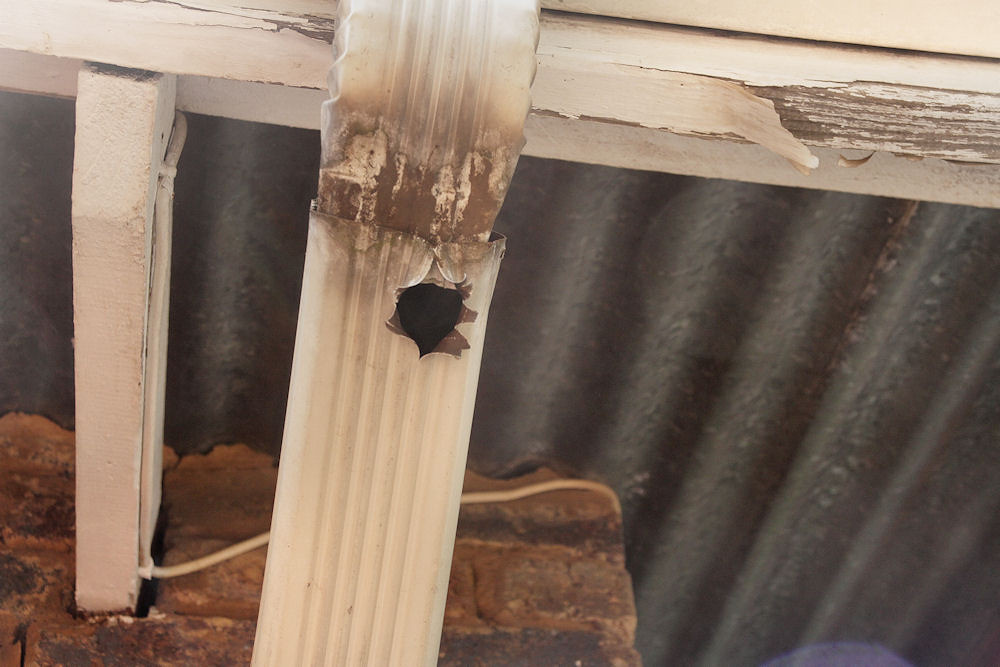
Bullet-like hole in downpipe
The lightning then struck the wall of the house at the base of the downpipe.
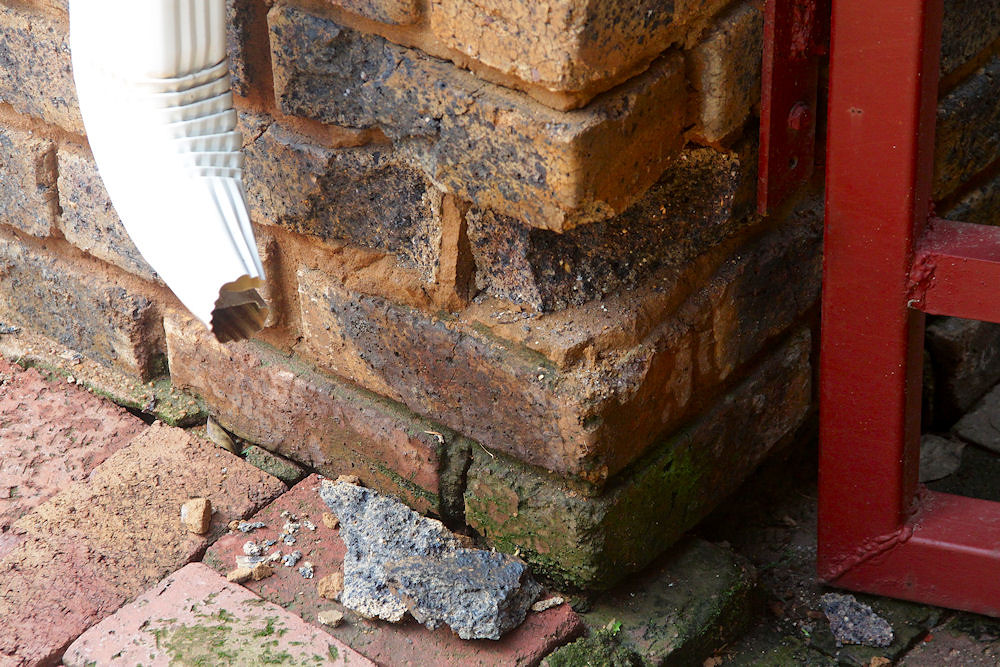
Damage to wall and base of downpipe
The energy from the motion of the bricks being dislodged was strong enough to bend and deform the downpipe. Now I am not sure whether the lightning ran down the downpipe to hit the wall, or hit the wall directly from exiting through the bullet-like hole shown above, but it certainly hit the wall with a rather large force.
What worried me about this strike was that there is no real connection between point #3 and #4 to point #1 (other than the roof) which could cause the damage outlined below.
Update After a rather heavy and extended downpour, a leak developed from the ceiling in the same vicinity as the pipe leak mentioned in section 3 below. Inspection of the roof in the ceiling space (at 0200 in the morning) revealed a small hole about the diameter of a Bic pen.
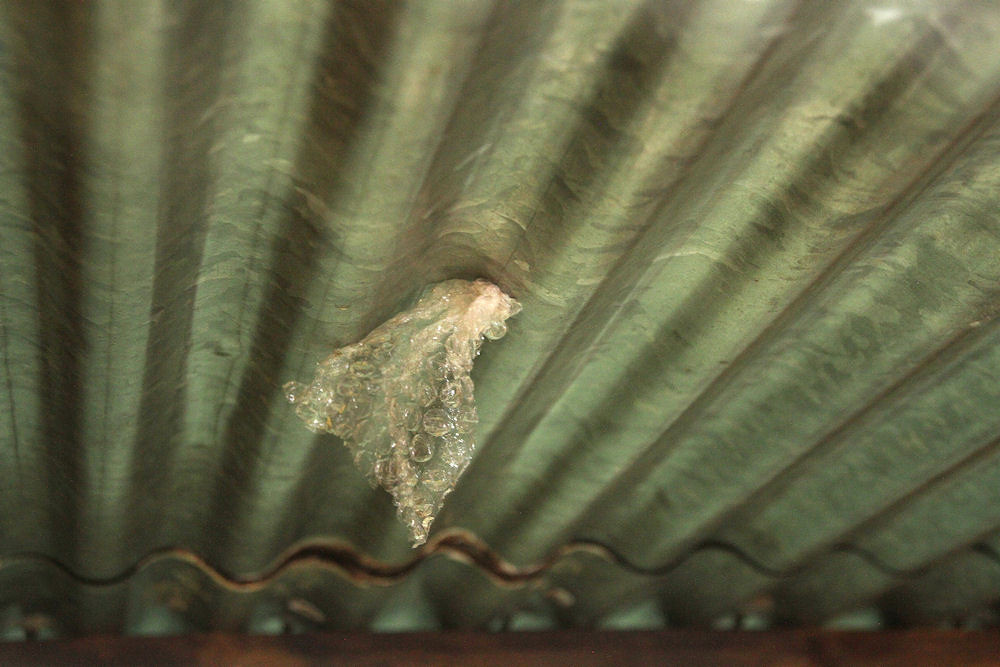
The hole plugged with bubble wrap
Pat managed to plug the hole with bubble wrap during the rain shower, just to stop the leak from damaging the newly repaired ceiling. No-one had noticed this small hole during inspections and repairs..
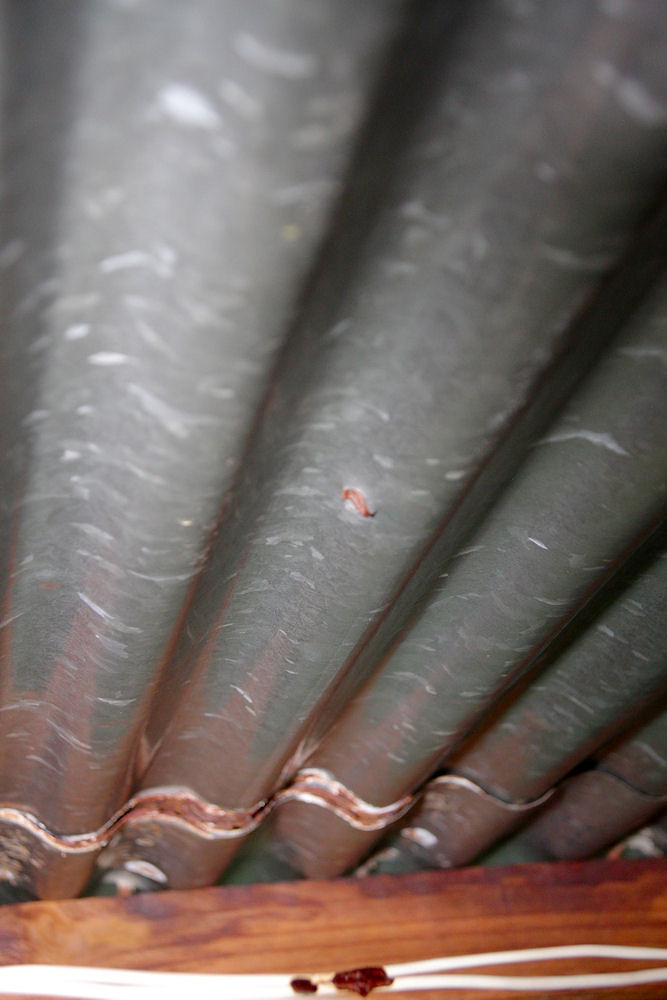
Fig 2: The hole was really small
During the next morning, once the roof was dry, we put a patch over the hole.
Internal Damage
We realised that the strike was extremely close when the earth leakage tripped on the main DB (of course, the noise associated with the strike was like the start of WW3). After re-enabling the earth leakage, it was a case of trying to find what was working.
1. The Internet
The first thing that I noticed was that the Internet was down. I immediately assumed that the strike had disabled the fibre link, so queried my ISP. They said all was fine as they could see my fibre ONT box. Further investigation showed that even with the power on, my UPS was still powering the network from its battery and not charging. The ONT was seeing the fibre link but not the router. Wireless connections to the router was possible, but none of the ethernet ports were working.
I replaced the Netogy UPS with my old POE-431P UPS, and the router with my old Telkom branded D-Link DSL-G225/KT router. This took me quite a while to get working as it is an ADSL router and I couldn't remember the password, so had to do a factory reset. From this reset, it took ages to find which setting in D-Link's convoluted menu system needed to be used in order to allow access the ONT.
The equipment mentioned is all powered from my study which is at point #4 in Fig 1. This is more than 20m from point #1 and on a different level.
2. Light Switches
After dark, I found a bedroom light was not working.
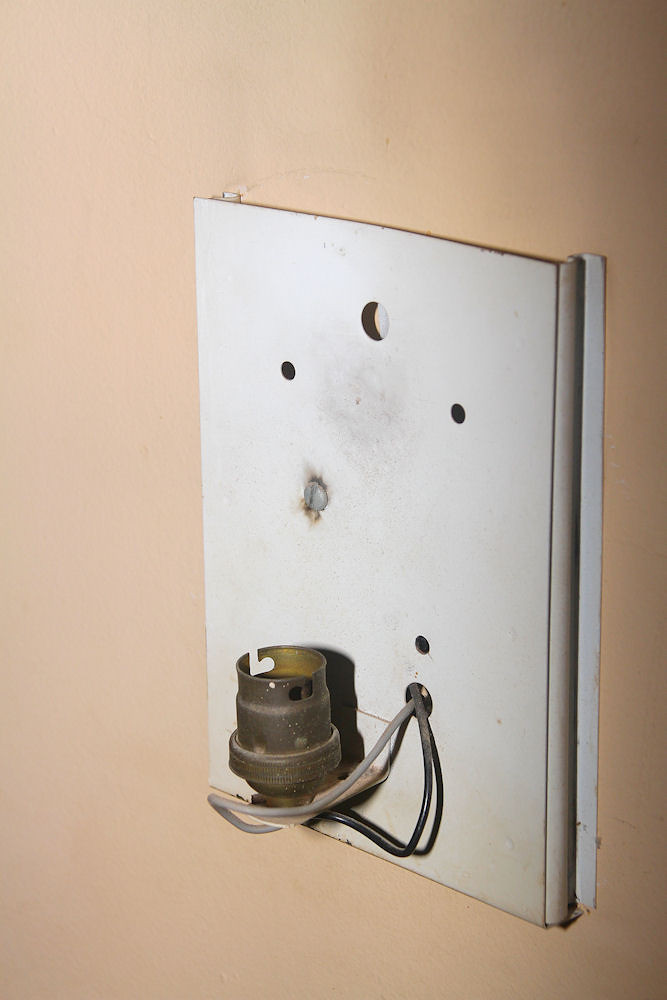
A light showing burning
You can see the burn marks on the retaining screw. The switch on this light was destroyed (unfortunately, you cannot see the switch in this picture, it is to the left and below the light fitting). I fixed this by replacing the switch.
Another light switch showed some signs of burning, but it was still working.
The wiring for both of these switches comes from the upper level of the house and is embedded in concrete. As with the network equipment, I could not figure out how the lightning could have affected these switches and none of the others in the house.
3. Burst Water Pipe
The next morning (about 15 hours after the strike), we heard a loud crash followed by the sound of running water. A water pipe in the ceiling had started leaking and the water had been damming up between the ceiling board and the paint on the board. Neither of us had noticed the bulge in the paint, in spite of having walked under it on numerous occasions.
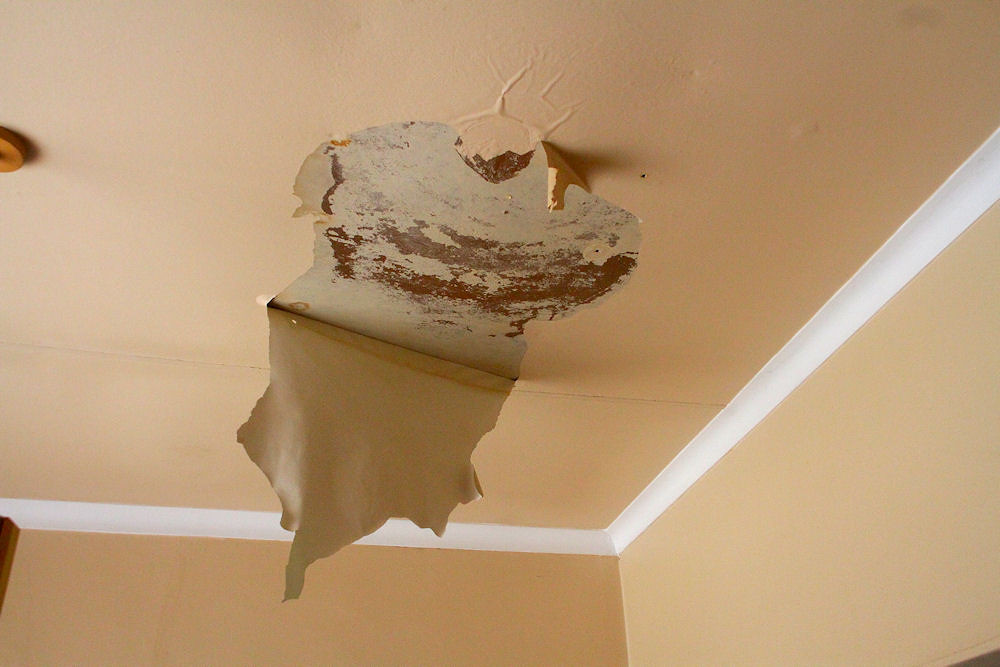
The damaged ceiling from the water leak
We felt that this was a random event and just our bad luck. However, when the plumber came to repair the pipe, he found burnt metal between two pipes probably caused by an electrical discharge.
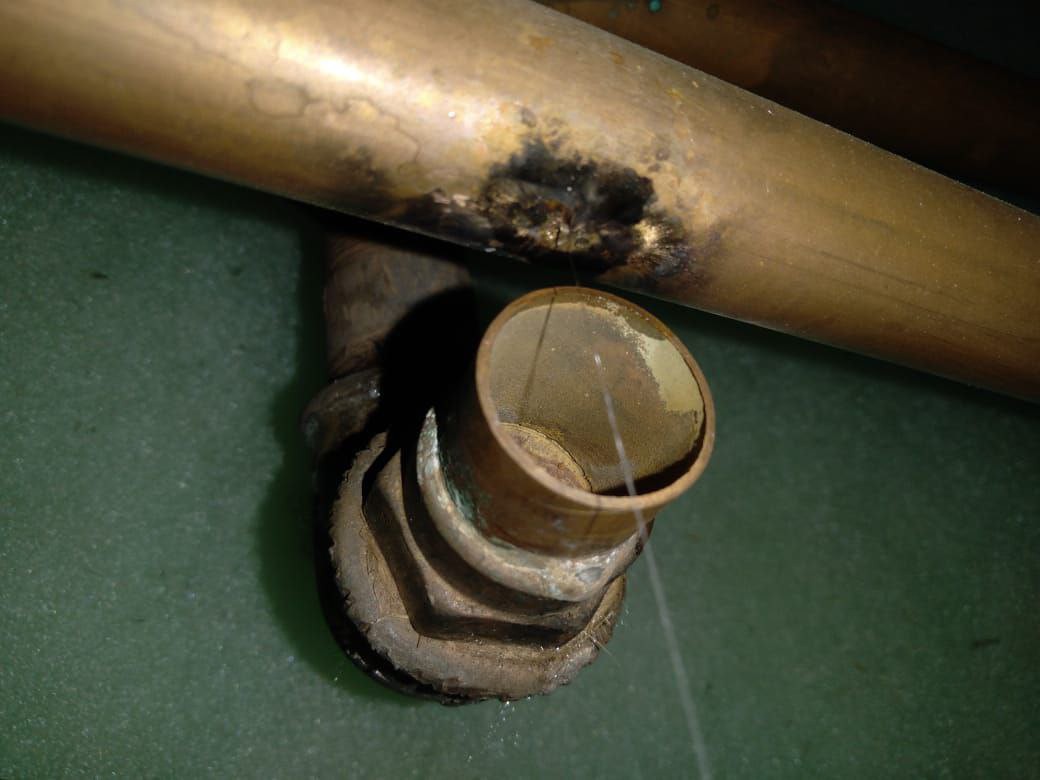
The damaged copper pipe leaking into the ceiling (photo courtesy Grant's Plumbing)
This arcing could only have been caused by the lightning strike. What really bugged me here was how did the lightning discharge get from point #1 in Fig 1 to close to point #3? This was cleared up on finding the hole in the roof sheeting shown in Fig 2 above. This hole was almost directly above the pipe. A side strike must have burnt through the roof sheeting and hit the pipe. Now this pipe is a hot water feed from a solar geyser on the upper level of the house - it can be seen in Fig 1 in line with the arrow associated with point #4.
Now I know how the lightning discharge got to the upper level of the house.
4. Alarm System
Another system which had a partial failure was the burglar alarm. Much of the wiring from the alarm's main board to the detectors pass pretty close to damaged pipe shown above.
While the technician was replacing the system, I noticed some pretty severe scorching around where the old system had been.
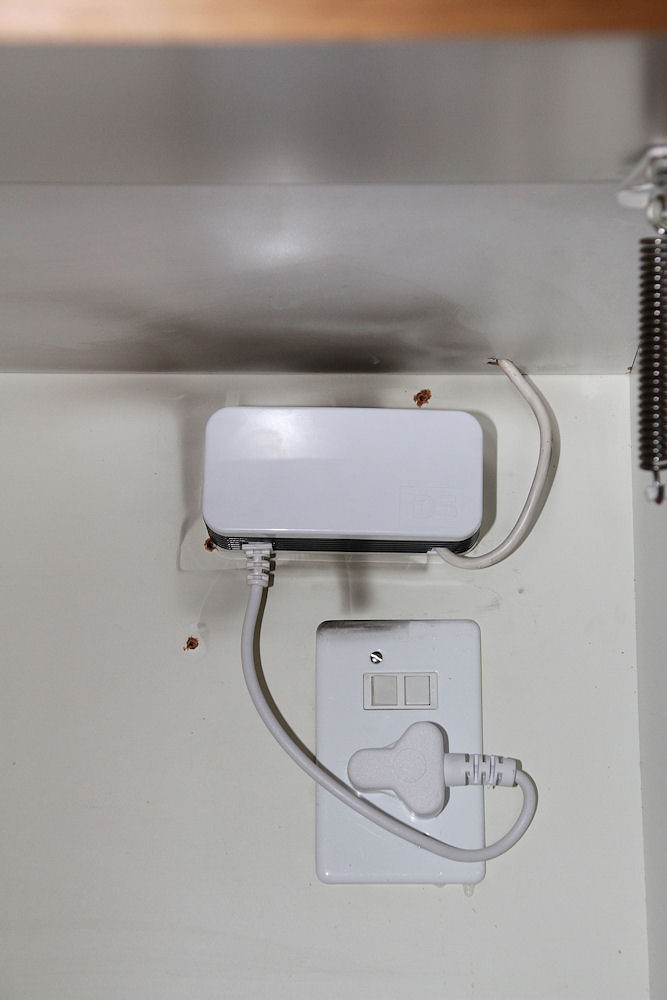
The new power supply
In the pic above, you can see the scorch marks around where the old power supply had been, where the cable had gone into the socket and on the top of the cupboard above the power supply. This device must have gotten pretty hot. I am surprised that it still worked.
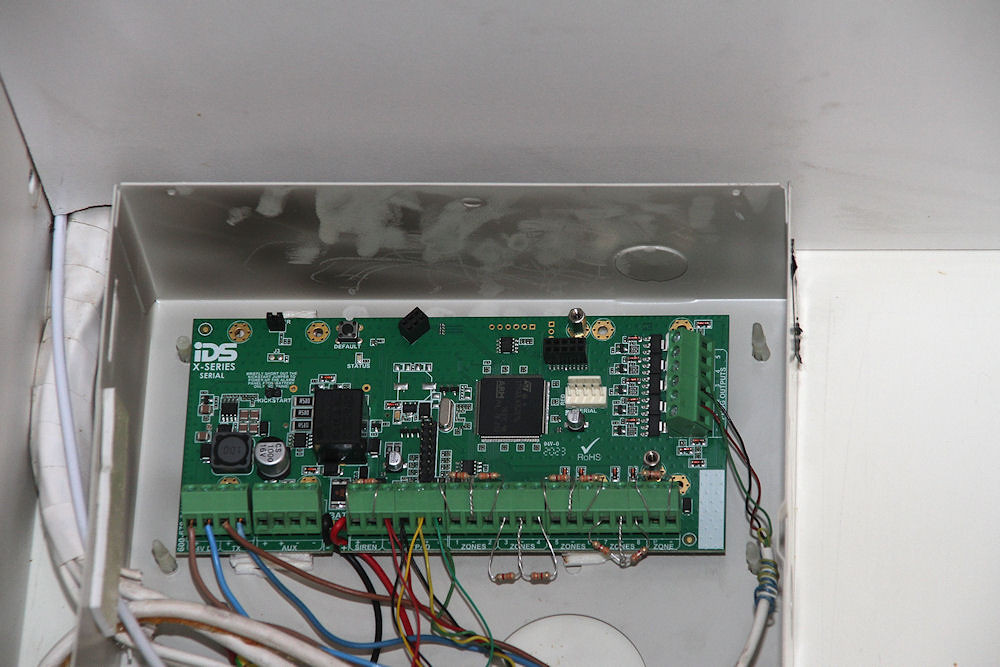
The new main board
As with the power supply, you can see scorch marks in the case above the new motherboard. Now I understand why very little of the alarm system was working. I think that we are fortunate that the battery wasn't affected. It is a LiFePO4 battery and these things don't like getting too hot.
I have since added a surge protector between the power supply and the mains in the hope that this may protect the alarm in the case of another strike.
Concluding Remarks
In retrospect, this could have been really nasty, with the house burning down. Lightning must have been flashing around in both the upper and lower ceiling spaces trying to find a path to earth. I feel we were lucky not to lose more devices, but we do have surge protectors on most of them, even though those aren't really designed for lightning, but rather protection from brown-outs during load shedding. The only one that did not work was the one "protecting" the mini-UPS. I have since put a more substantial surge protector in the line.
(6 April 2024)
