Alan's Brewery
Brew Process
These days as I only do partial mash brews, I thought I'd share the process that I use since I am still a "bucket" brewer. Unfortunately, I don't always have someone around to take pictures, so not all the steps will be illustrated. I will also update the pictures if I get better ones.
Equipment
I have an array of my own utensils which are kept entirely separate from the kitchen utensils, as I am very wary of any unwanted flavours that the kitchen utensils may impart to the brew during the brewing process.
- 12 L Stainless steel cooking pot
- 5 L Plastic jug
- Long handled stainless steel spoon
- Wooden spoon
- Large strainer
- 3 kg Digital kitchen scale
- 10 kg Mechanical kitchen scale
- Miscellaneous plastic containers used for weighing ingredients
- Hand mill for milling malted barley
- Medium sized preserve bottle for activating yeast
Non-kitchen items used during brewing are grain bags, hop bags, a thermometer and a hydrometer.
All water used is filtered through a 2-stage filtration system.
Preparations
I put two 5 L bottles of water into the freezer at least 2 hours before starting (I want ice cold water, not ice).
I boil water in the kettle for the steeping process as this is usually much quicker than trying to boil it from cold in the pot. I usually use three kettle boils (~6 L) for steeping. The useful thing about this, is that by the time I add the third kettleful, the temperature of the water in the pot has usually dropped to around 75°C. When the grain bags are added, this drops to about 65°C which is more or less what I want for steeping. I usually switch on the plate at a very low level to maintain the temperature.
While the water is boiling, I weigh out and mill the grains.
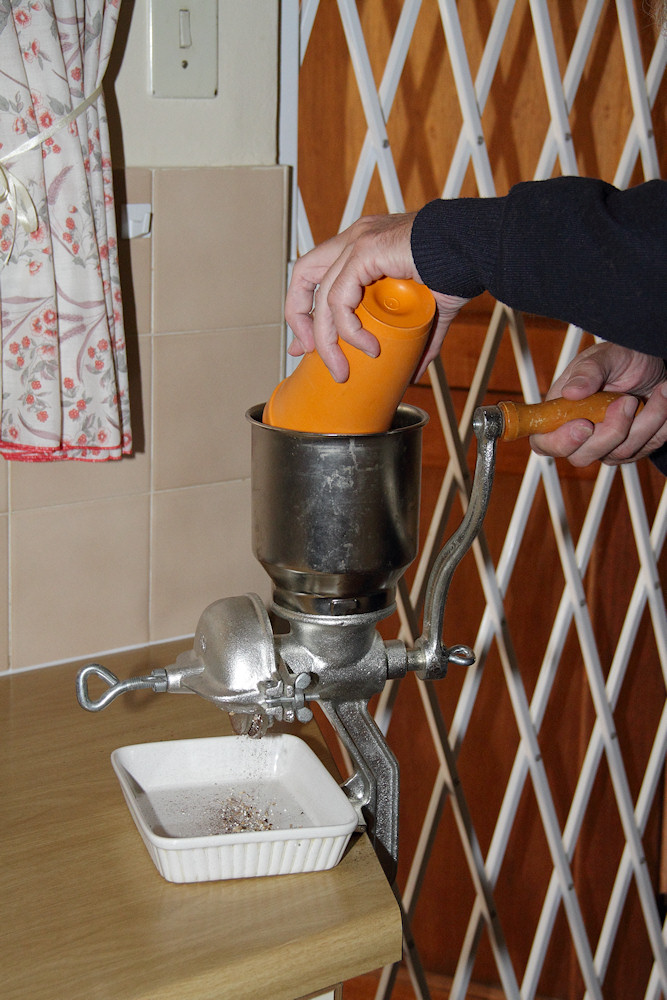
Milling the malted barley
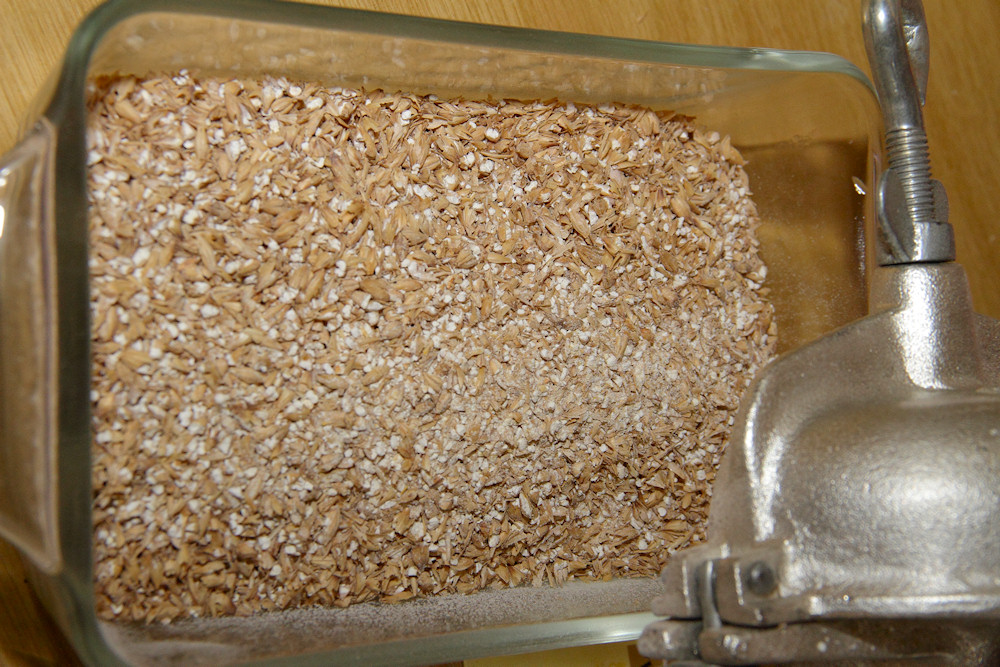
Milled grain
The milled grains are then added to the grain bags. (I normally use one bag for pale malt and another for dark malt.)
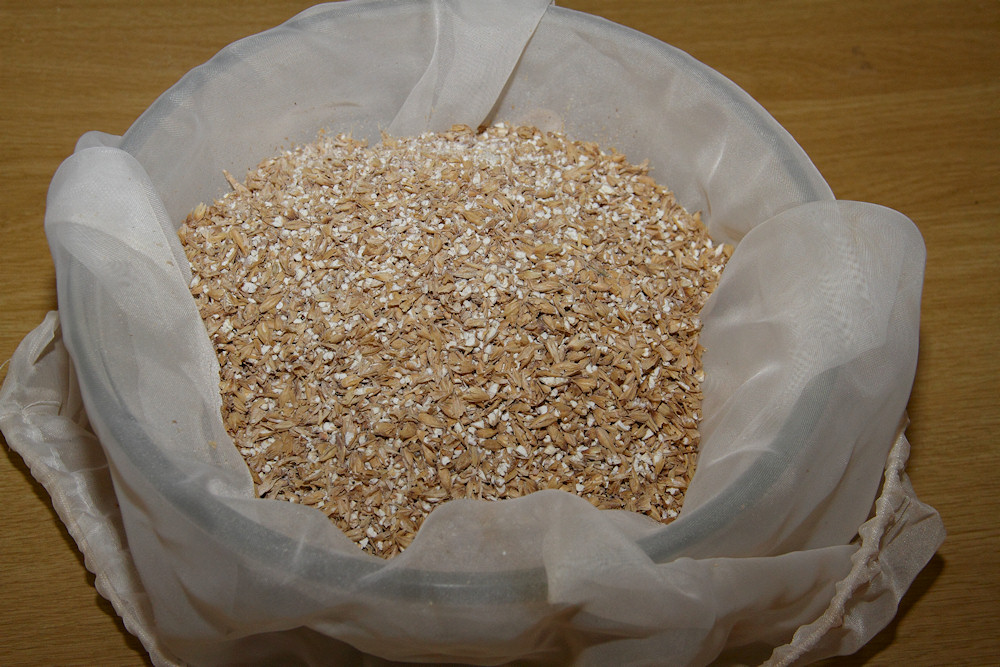
Cracked pale malt in grain bag
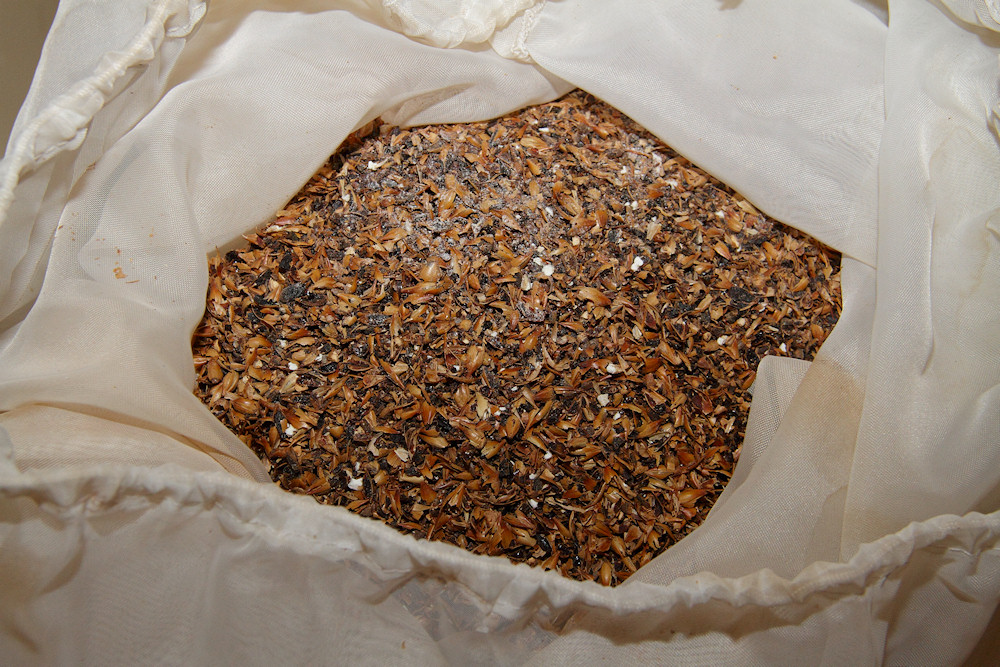
Cracked dark malt in grain bag (here a dark caramel malt)
Once the water has reached the desired temperature, the grain bags are added.
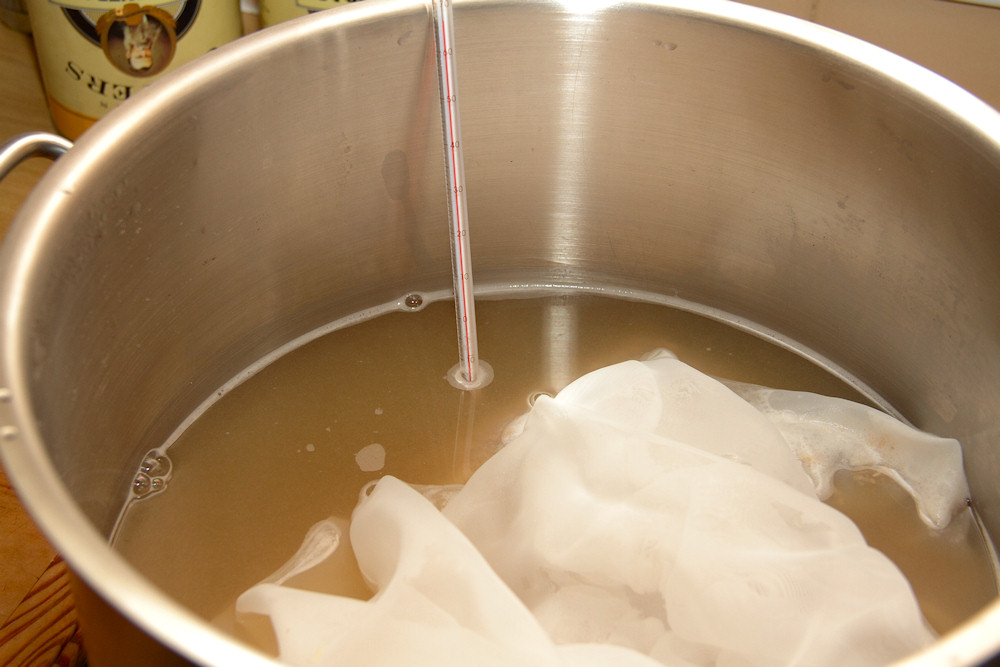
Steeping the grain
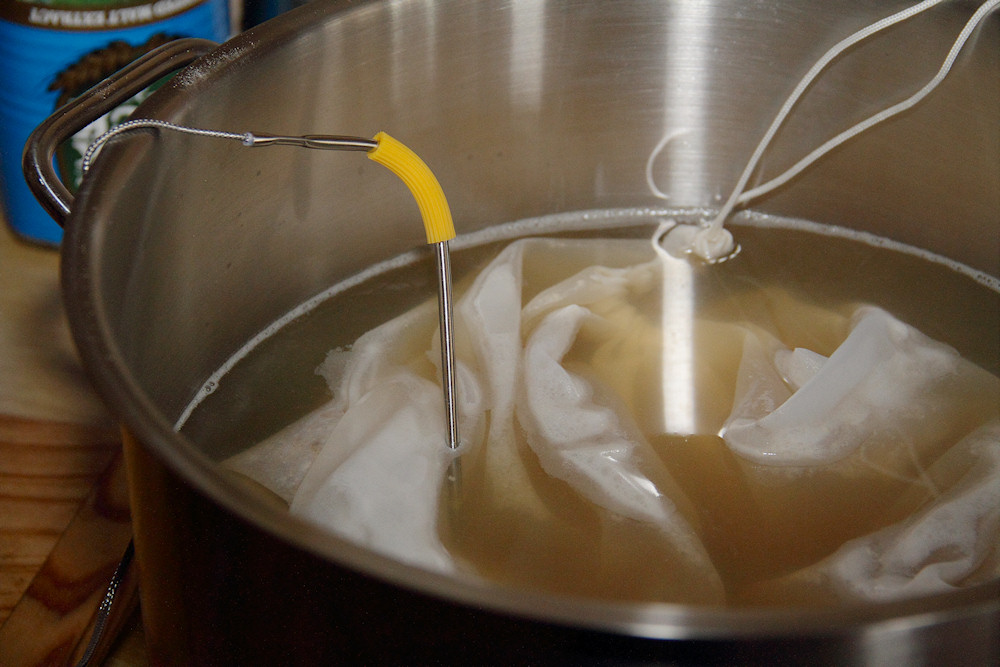
While the grain is steeping, I sterilize the preserve bottle by adding boiling water. I let it stand for 5 minutes, then turn the bottle over and let it stand for another 5 minutes to sterlilize the lid, then discard the water. After this, I add about a cup of fresh water, one teaspoon of sugar and heat it in the microwave for 10s (to get the temperature to around 30°C). The dry yeast is then added. I also weigh the hops and add it to the hop bags
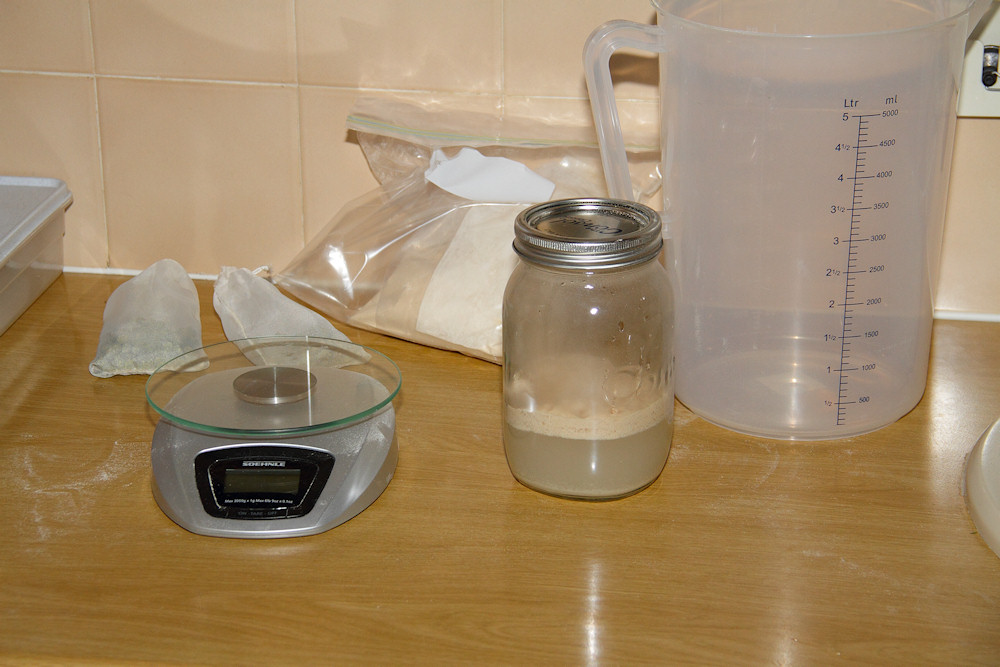
Activating the yeast (note the hop bags behind the scale)
During the boil, I sterilize the fermenter, hydrometer and stainless steel spoon (items that will come into contact with the cooled wort). I still prefer using household bleach (Jik) for sterilizing any equipment. I am not too happy with "no rinse sterilizers".
Process
Parts of the process have been mentioned earlier, but I will list them all again and add more detail where necessary. For a timer, I use the Android app Stopwatch and Timer. The free version of the app allows you to store three timers.
- Steep grains for 30 minutes at temperatures between 65°C and 72°C (higher temperatures will also extract tanins from the husks of the grains, which will add unwanted flavours to the brew).
- Remove the grain bags into a strainer and flush with warm water. Let them drain into a suitable container. Add this liquid to the wort.
- Bring the wort to the boil.
- While the wort is coming to the boil, add the malt extracts.
- When the wort is boiling, add the bittering hop bag and boil for 1 hour.
- If required, add flavouring hops 5 to 10 minutes before the end of the boil.
- Rinse the fermenter, hydrometer and stainless steel spoon with hot water.
- Pour hot wort into fermenter.
- Add the ice water to the wort, with as much agitation as possible (without messing) during the pour for aeration.
- Add cold water to get to the required volume/SG.
- Check the temperature and add ice if necesary to drop the temperature below 25°C.
- Check the SG, using the stainless steel spoon to move the foam away so that the hydrometer can be read.
- Seal the fermenter.
- Add the airlock.
Update I have found that boiling the hops in about a litre of water, while the grains are being steeped and then adding the liquid (and the hop bag) to the wort improves the hoppy flavour tremendously.
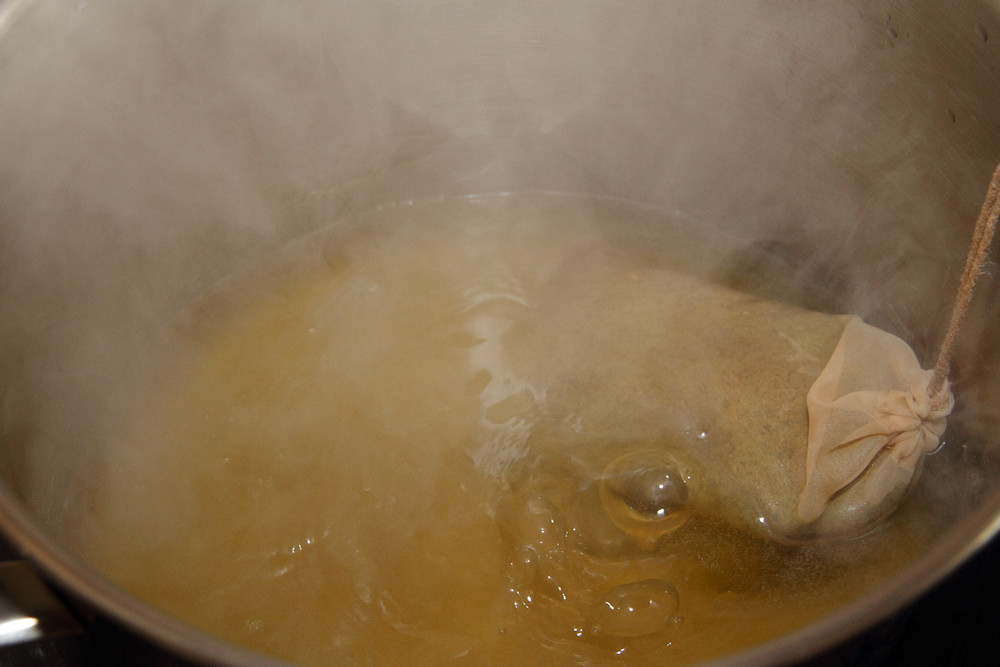
Boiling the hops in a separate pot while the grains are steeping
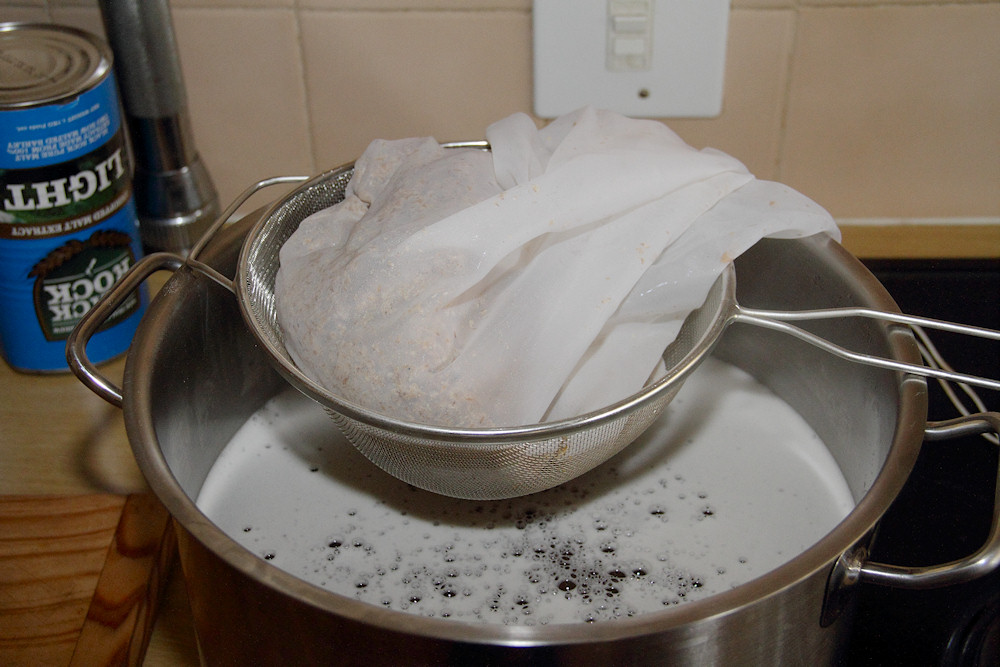
Straining the grain
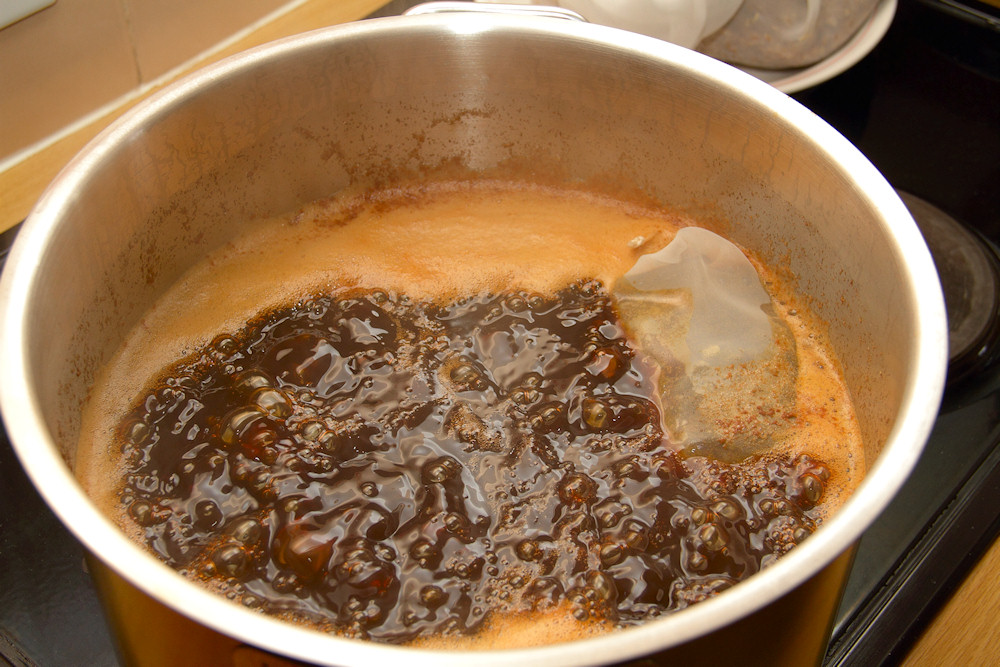
The wort coming to the boil with the hop bag added
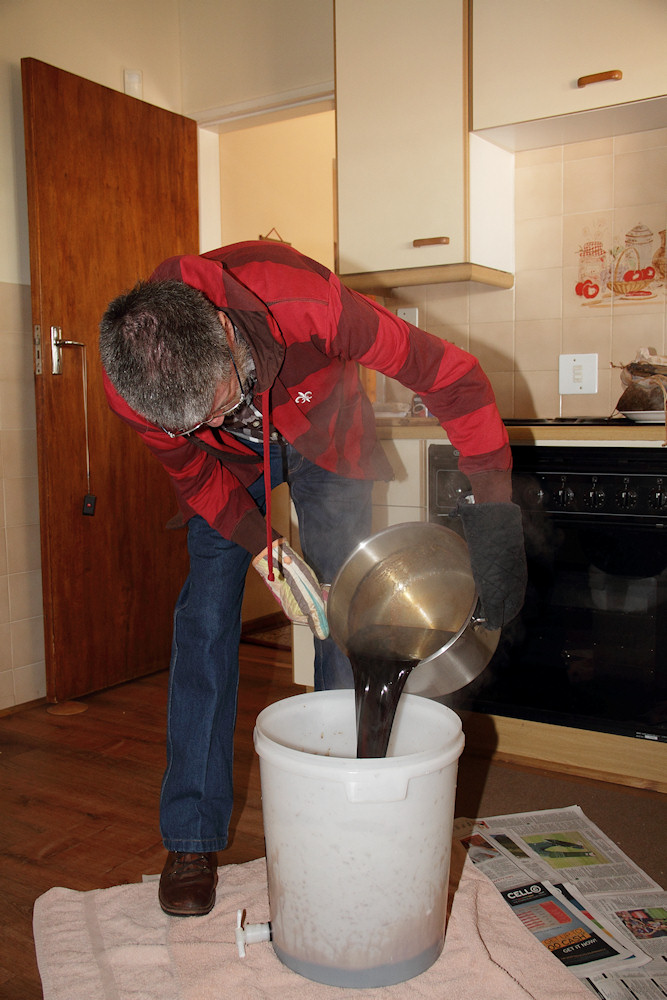
Adding the wort to the fermenter
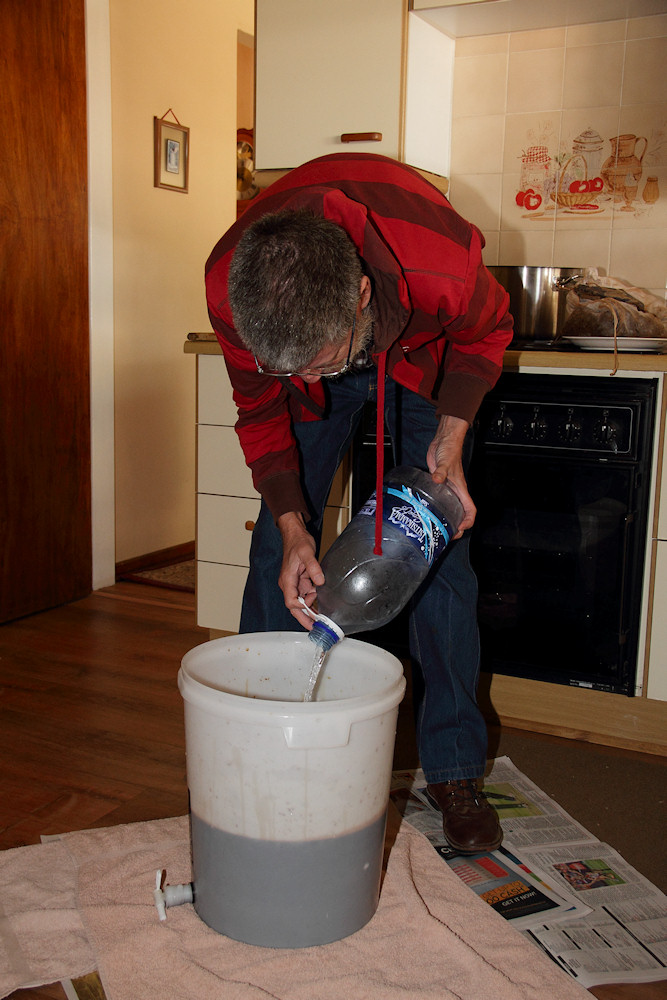
Adding iced water to the wort
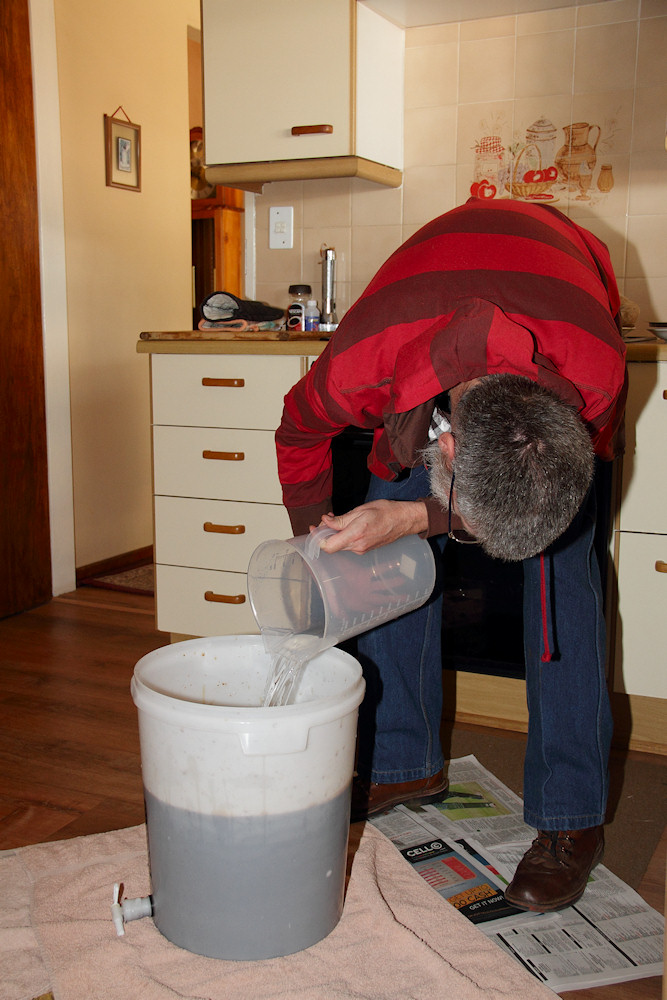
Topping up the wort to the required volume
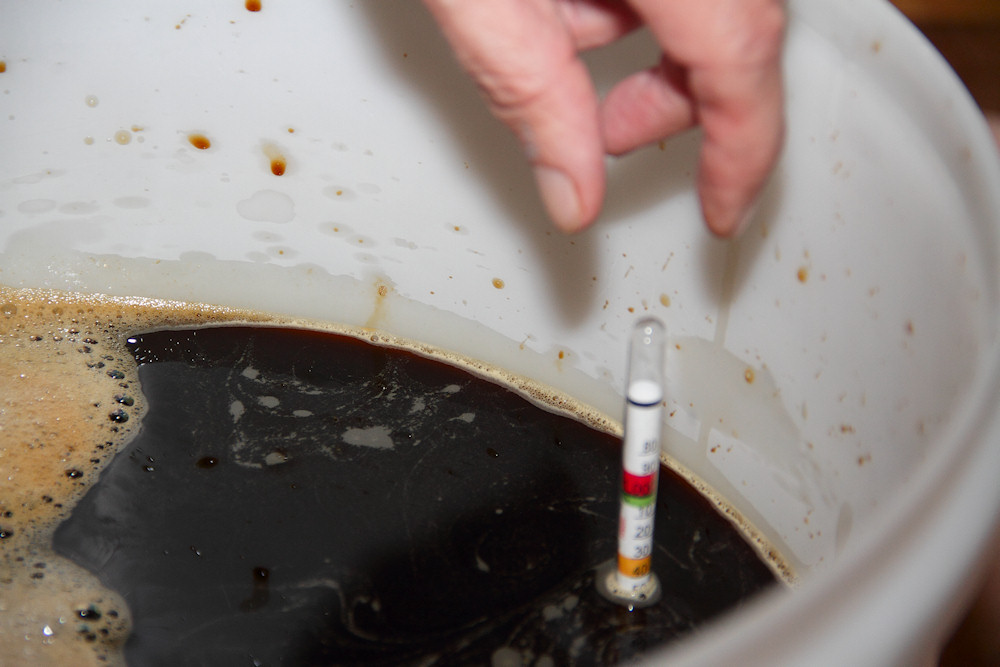
Checking the SG - note the area cleared of foam
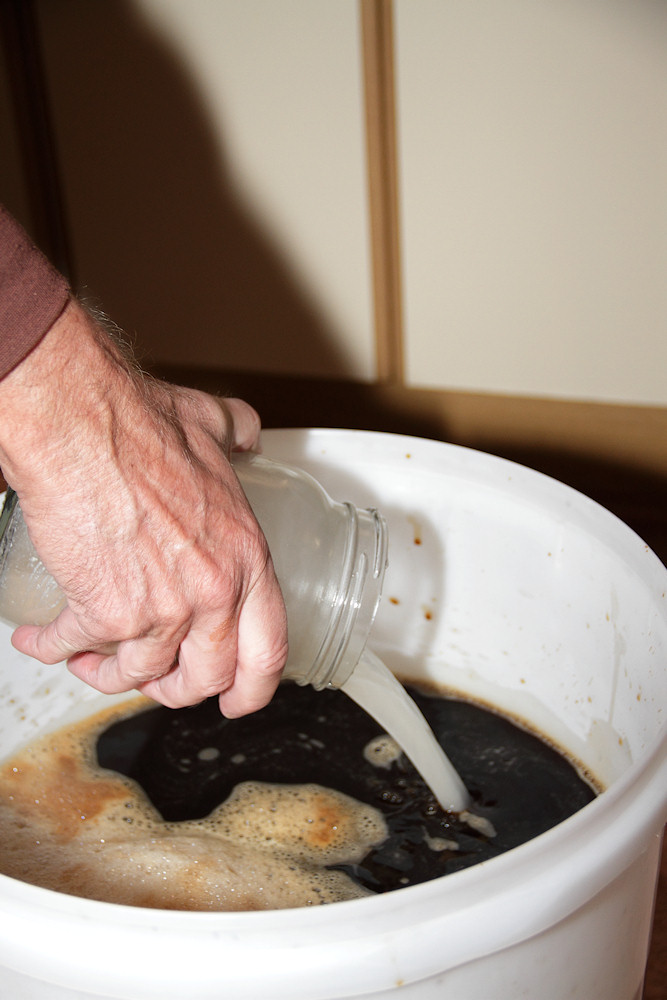
Piching the yeast
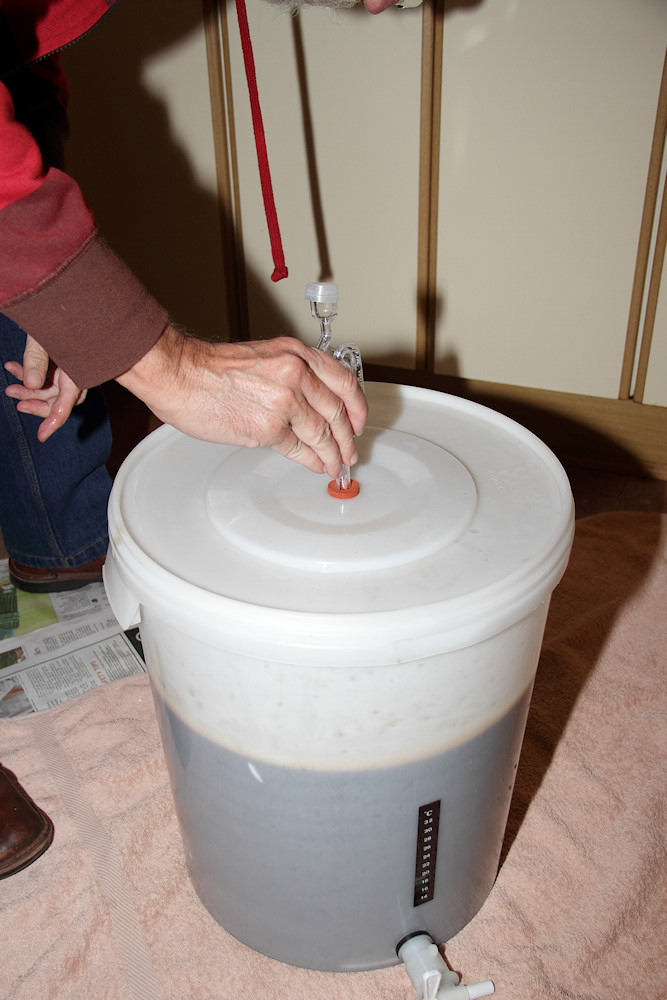
Sealing and inserting airlock
The next step is bottling, which will be coming soon.
Back to Brewing
