Gadgets
High Pressure Cleaner: Trade Professional HP2000
Introduction
I have been interested in a high pressure cleaner for a while, especially after Francois described how easy it made cleaning stubborn dirt from surfaces. He has a Kärcher K3, but that is way outside my price range. I became really interested in such a cleaner after algae started taking hold on the concrete foundation slab under the JoJo. I tried several cleaning methods, including scrubbing, but that was very time consuming, and not as effective as I would have liked.
I came across the Trade Professional HP2000 in an ad on Takealot which was on a special at the time for half the price of the Kärcher K3. It had very favourable reviews, so I decided to take a chance and buy it.
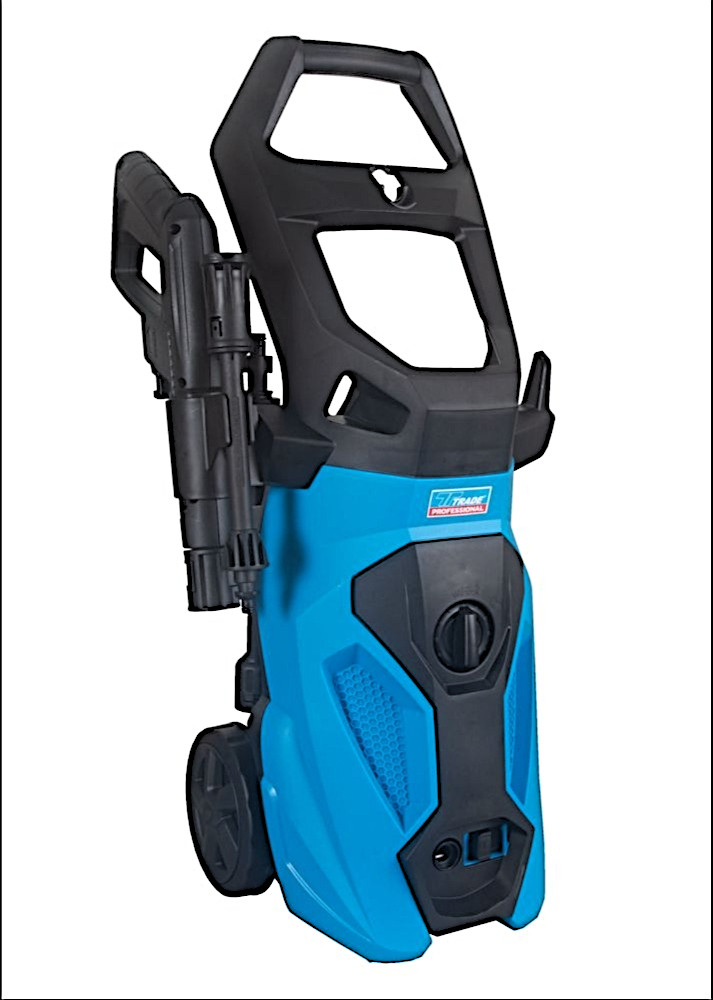
Fig 1: The Trade Professional HP2000
First impressions
The cleaner was easy enough to assemble and the only issue I had was that a nozzle cleaning tool, which was supposed to be part of the package, was not included. What was rather irritating was that the local distributor of the cleaner did not have the decency to respond to an email query about this.
Connecting the gun, lance and the high pressure hose was easy. Connecting the garden hose to the Gardena-type tap fitting at the back of the machine was a lot more tricky, but I will discuss that later.
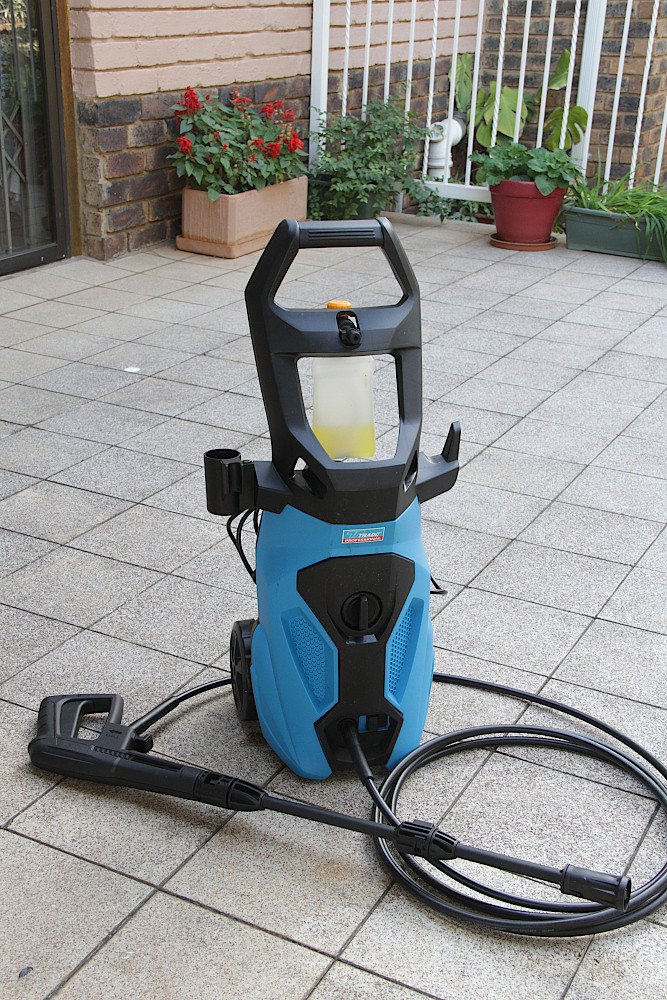
Fig 2a: Gun, lance and high pressure hose connected
Rotating the nozzle regulates the intensity of the jet from the nozzle. With my first test, I used the cleaner to try and remove the algae around the JoJo. On its highest setting, the stream is strong enough to etch concrete, so do be careful with your starting setting. The lower settings also removed the algae, but required a lot more water.
One thing I was very pleased about was that the pressure head in the JoJo was sufficient to feed the HP2000. This means that, providing there is sufficient water in the JoJo, I do not have to use municipal water when using the HP2000.
This is not true. With my first tests, this worked well and it worked with cleaning the algae from the concrete slab under the JoJo. However, the pump is no longer able draw water from the JoJo. According to ChatGPT, most pressure washers require a minimum input pressure of 200kPa to function properly (this information is not given in any instructions for any pressure washer that I have read), otherwise this can damage the pump. A full 5m³ JoJo delivers a maximum pressure of 20kPa. I did notice that the pump did take strain on some occasions when using water from the JoJo and have a feeling I did damage it.
24 November 2025
My second test was on the patio. I want to regrout it, but before I can do that, it needs to be cleaned. Regular cleaning with household detergents, hasn't really done the job, so I tried the HP2000 to see how effective it would be.
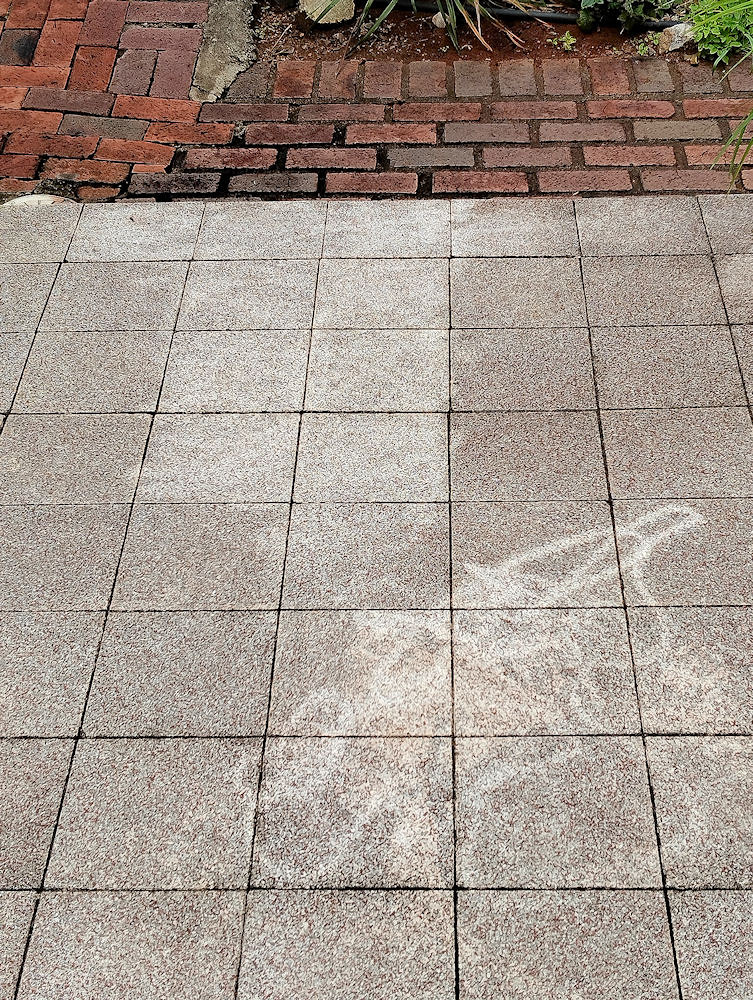
Fig 2b: An area of the patio cleaned with the HP2000's nozzle
In Fig 2b, you can see the results of my first tests on the patio with the HP2000. On the bottom right, the tiles that seem to have writing on was done with the nozzle on its highest setting. While this worked very well, it would take an age to clean the whole patio. The tiles in the centre of the picture towards the top left, were done on a lower setting, but also took a fair amount of time (and water). So, I had to look at other solutions. The first was a foam cannon, but I have yet to find a detergent that will do the job. The second solution was something Francois said I should look into - a turbo nozzle. This had its own set of problems, but did the job quite well.
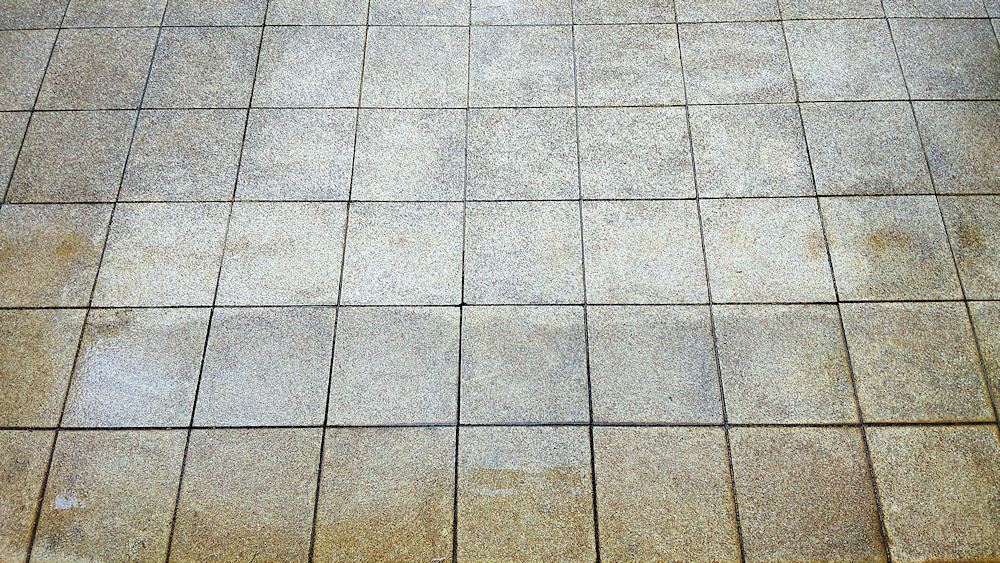
Fig 2c: An area of the patio cleaned with the turbo nozzle
From Fig 1, you can see that you are given no indication as to where you should store the rolled up hose and electrical cable. This may sound like a trivial issue, but neither of the hooks available are really suitable for the job. [Update: I have found a workaround for the hose.]
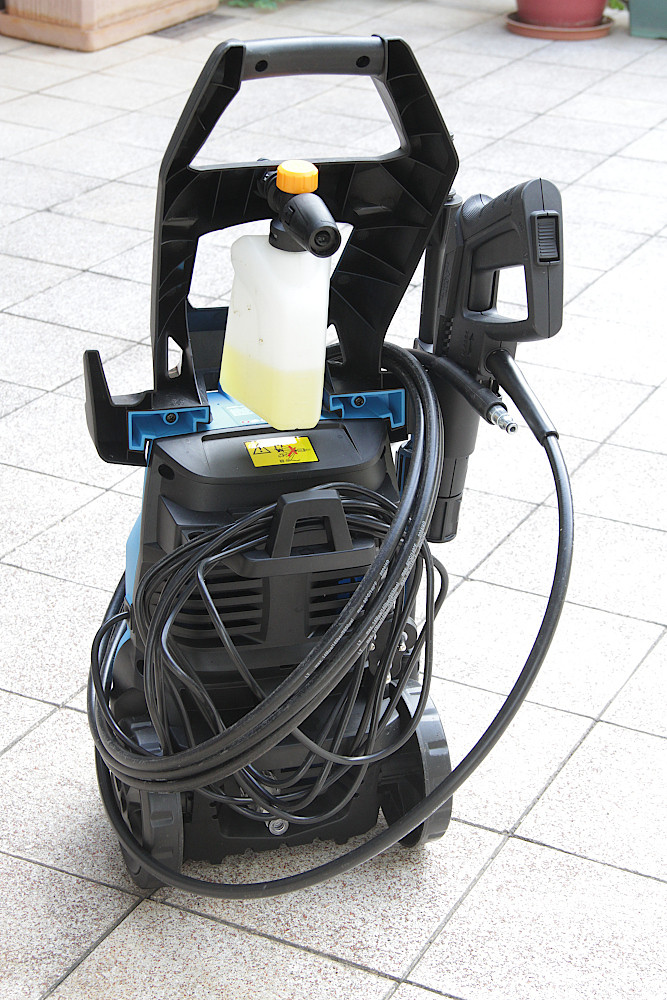
Fig 2d: Storing the attachments
As you can see from Fig 2d, as a test, I tried putting the electrical cable over the back hook, with the pressure hose over the handle with an end plugged into the gun to stop it from flopping around.
The ergonomics of this gadget is the only issue that I have. Firstly, the wheels serve very little purpose - the handle is not adjustable, so I have to bend in half to move it using the wheels. Even Pat, who is a good deal shorter than me, has to bend to move it with the wheels. As it is reasonably light, I normally use the handle to carry it.
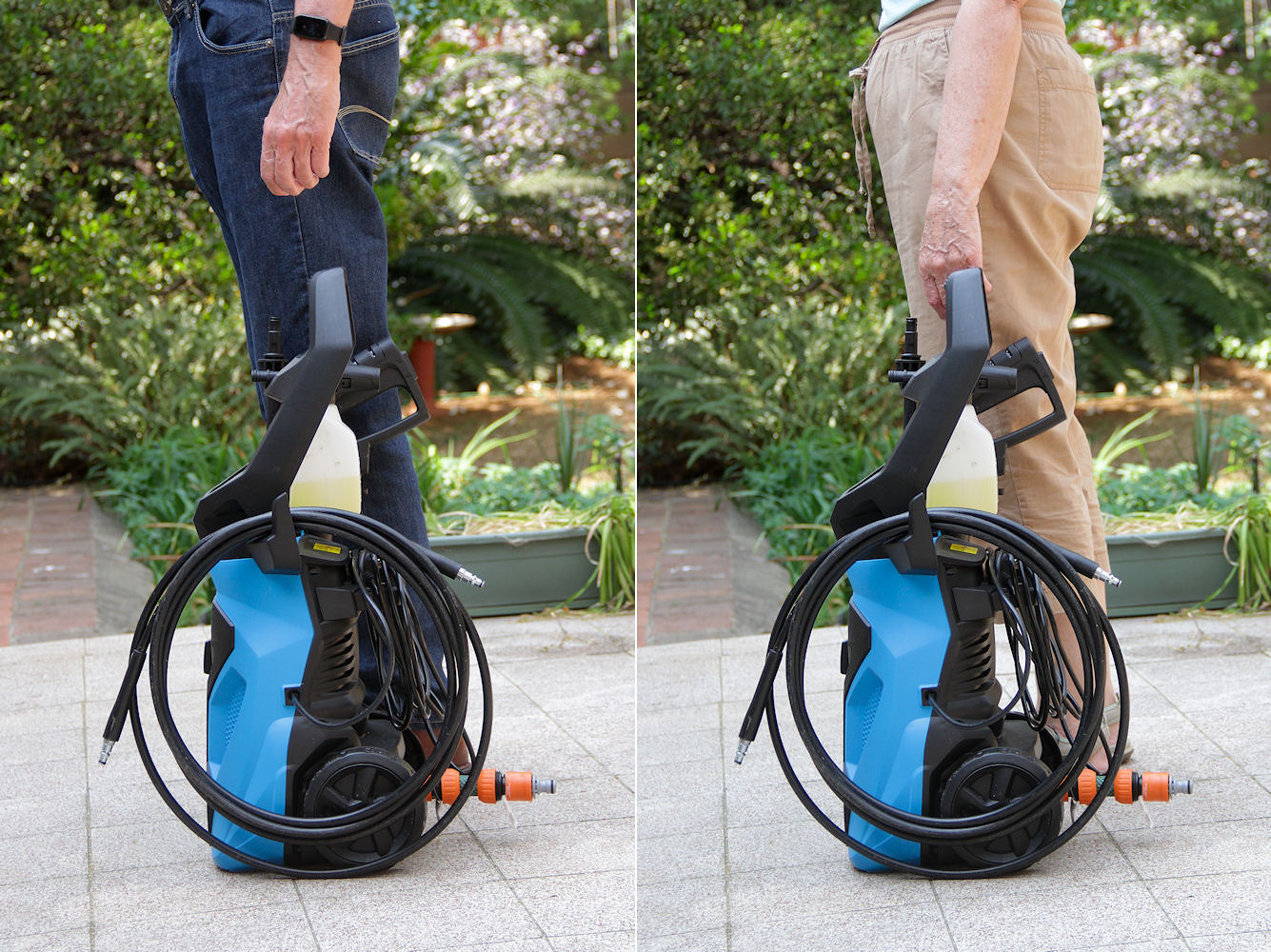
Fig 2e: Showing the position of the handle relative to the hand
The other ergonomic issue is the garden hose inlet connection. Ostensibly, this looks like a standard Gardena fitting - until you try and connect the hosepipe. It takes a great deal of force to get the hose connector to clip on to the HP2000's fitting (I have skinned knuckles to show for this). I have since found there is a flaw in the design of some of the Chinese made Gardena-like hose connectors.
The lance
The standard lance (or wand) consists of two segments.
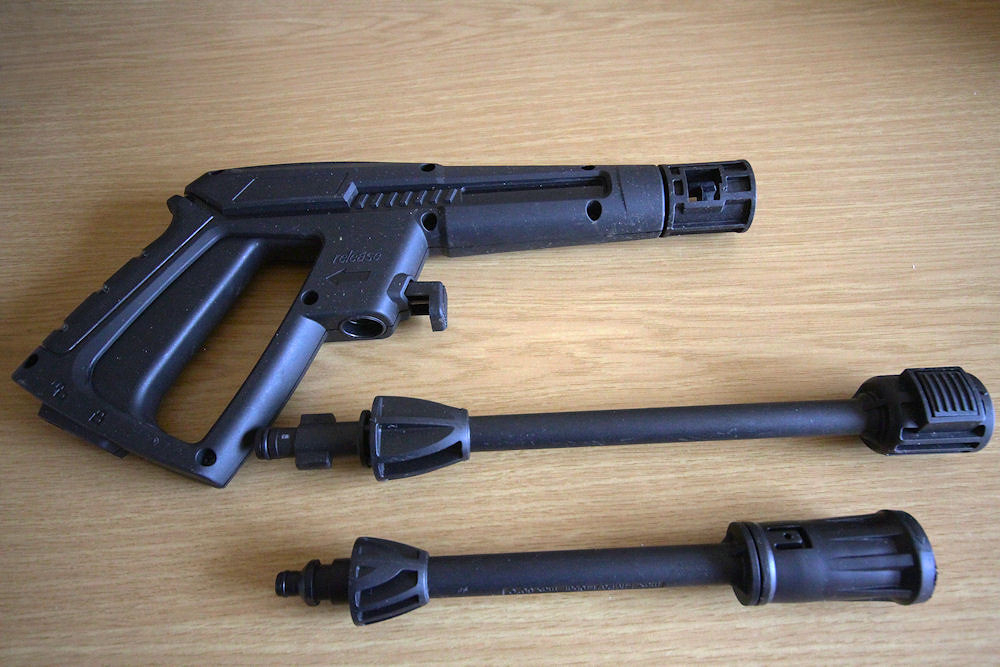
Fig 3a: The gun with the two segments of the lance
The left hand connector on the upper segment fits into the gun. The right hand end is the receptacle for the left hand connector on the lower segment. The nozzle is on the right of the lower segment. An irritation to me is that the connectors on the two segments are different. The connector into the gun requires a push and twist action, with a push and a twist in the opposite direction to remove it. The connector joining the two segments requires a push until it clicks into position action. The receptacle for the connector has a button which must be depressed so the two segments can be pulled apart. A fair amount of force is required to separate the two segments.
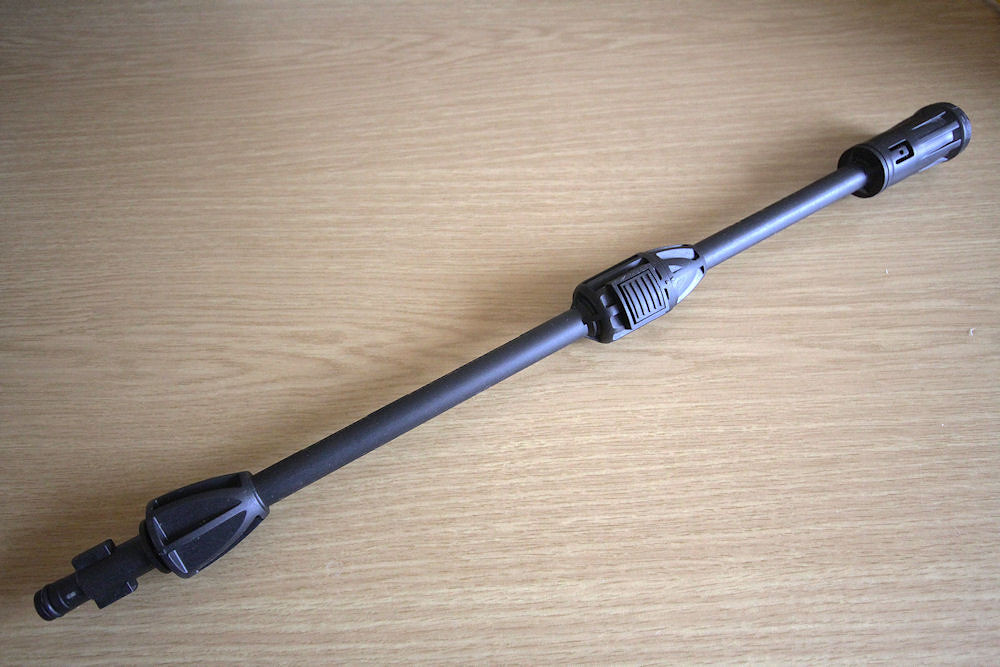
Fig 3b: The lance
Some locally available brands, such as Ingco and Bennett Read, have the same setup on their lances.
I leave the two segments joined together to save wear and tear on the connector.
Inlet connector
As mentioned above, it is incredibly difficult to connect and remove a hose to and from the inlet hose connector. It took me a while to figure out the problem. A standard Gardena tap fitting works with no problem, but the Trade Pro's inlet connector has an advantage in having an inline mesh filter.
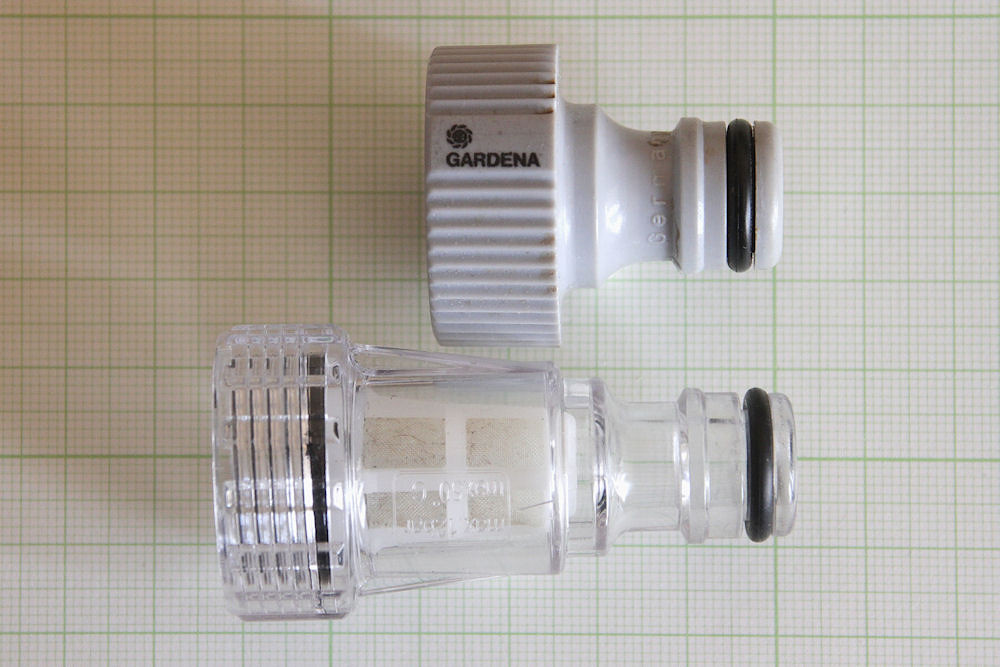
Fig 4a: A comparison of a standard Gardena tap connector and the Trade Pro's inlet connector
If you look at the pic above, from the o-ring to the left, there is a section between the locking ridge and the o-ring which is the cause of the problem. On the Gardena fitting, this is 3mm whereas on the Trade Pro's connector this is 5mm. This extra 2mm makes it difficult to push the hose connector far enough for the locking clips to get beyond the locking ridge.
If you look at the mesh filter in the Trade Pro's connector you will notice that it has stopped quite a fair amount of grit, and to me this is a huge advantage. Mishandling of the hosepipe will often result in bits of grass getting into it. I have also found that brown button spiders (one of funnel web spiders) like building their webs in the hose connector. These objects can easily block the outlet nozzles of a pressure washer. For this reason, I really wanted to have that filter in the inlet line - it is far easier to rinse the filter than unblock a nozzle.
This prompted me to build an adaptor so that I could use the Trade Pro's inlet connector and not have issues connecting and disconnecting the hose.
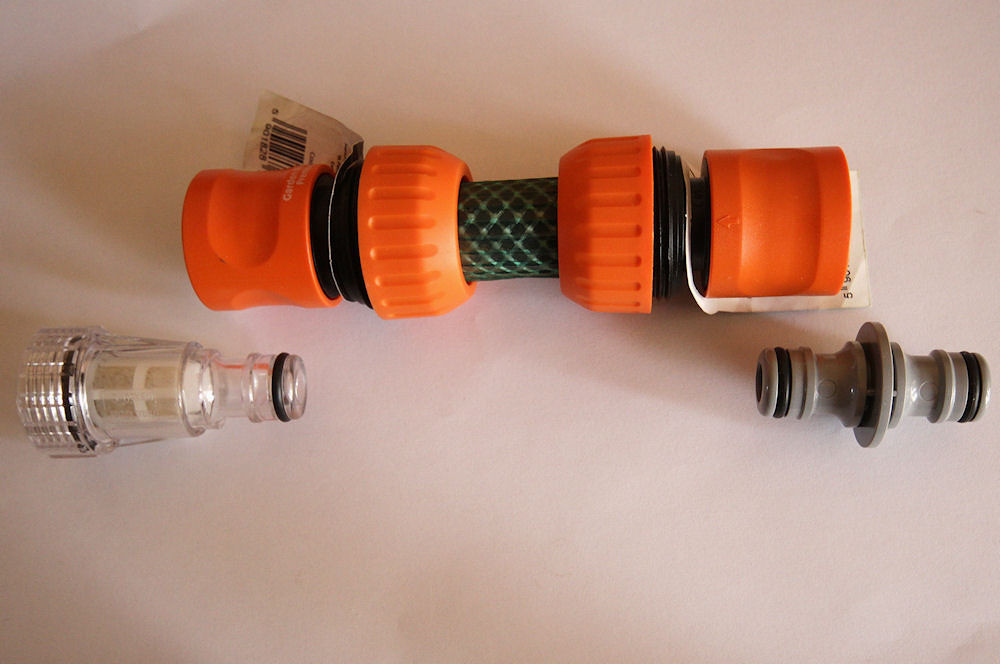
Fig 4b: My adaptor
My adaptor consisted of a short piece of 19mm hose, two hose connectors and a straight-through connector.
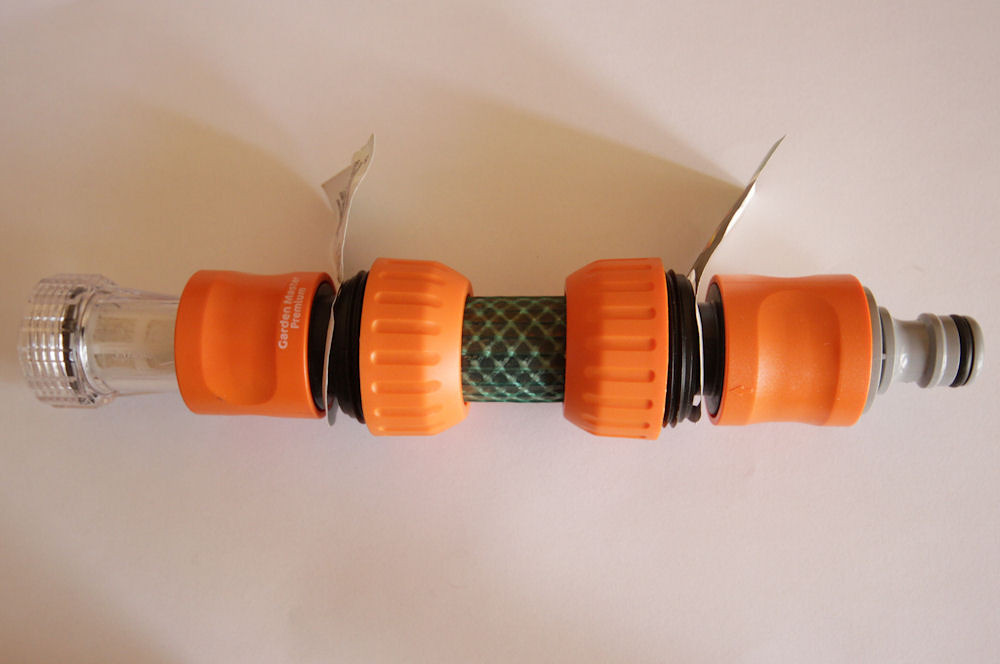
Fig 4c: Adaptor with all the pieces connected
You can see this adaptor in position in Fig 2e.
A word of advice: when shopping for connectors, check that the o-ring fits snugly in its slot and that the gap between the locking ridge and the o-ring is the same as the width of the o-ring. I bought a straight-through connector of the same brand as the hose connectors shown in Fig 4b and these had the same problem as the Trade Pro's inlet connector. I had to use a screwdriver to lever the straight-through connector out of the hose connector. A Gardena straight-through connector (Fig 4b) did not have this issue.
(updated: 5 October 2025)
Concluding remarks
Apart from the niggles I mentioned above, the Trade Pro HP2000 pressure washer does everything that I need, especially with the accessories I have added. I was extremely lucky with the price that I paid for it.
I would definitely recommend getting a turbo nozzle.
(updated: 14 October 2025)
Update: cleaning the patio
We finally go around to cleaning the patio (see Figs 2b and 2c above). In doing this, we used the Hinen PS3000 to power the HP2000 and the new turbo nozzle.
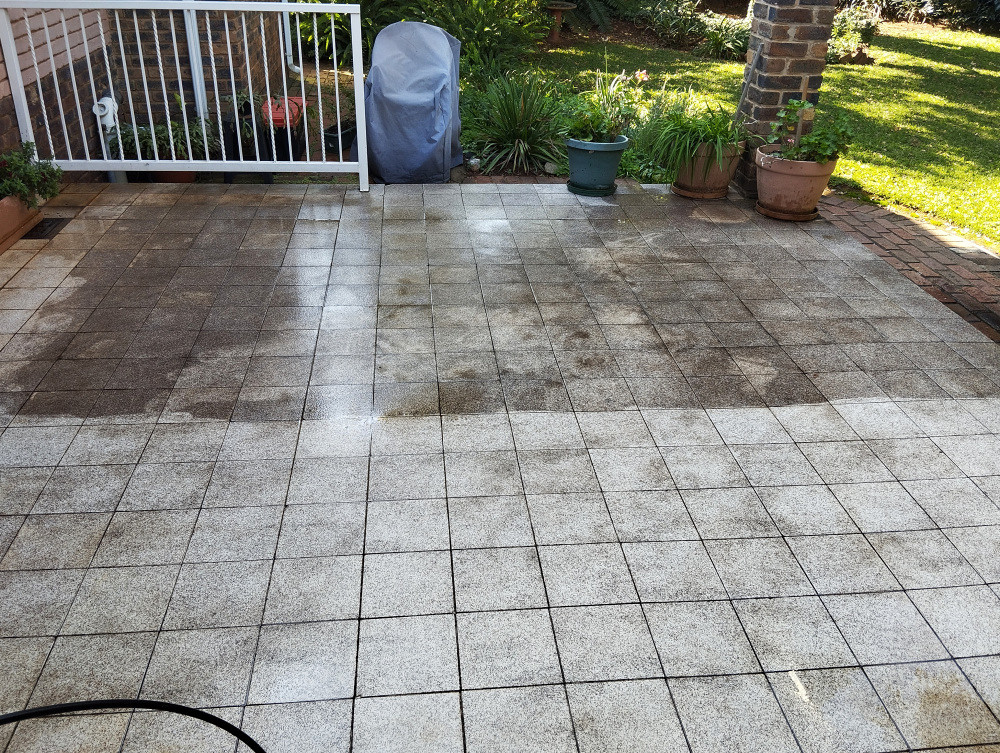
A section cleaned
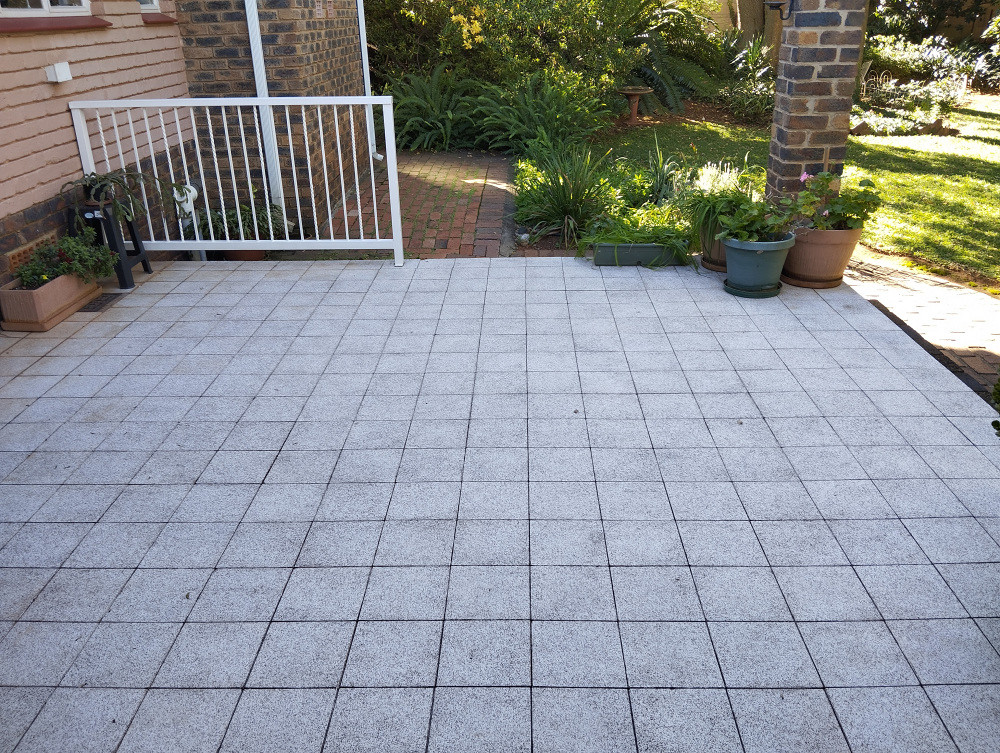
After cleaning
The second half of the patio included a soaping with the foam cannon before a final rinse and clean with the turbo nozzle.
The HP2000, together with the turbo nozzle, did a really effective job. For normal cleaning tasks, I will be using this nozzle from now on — I can see very little reason for using the HP2000's lance.
What did surprise me was how little water this exercise used. Although I did not take before and after readings on the municipal meter, my monthly water readings were well within the normal budgeted values.
(updated: 16 May 2026)
Storing the hose
I did mention earlier that storing the hose is not easy. If you look at Fig 2d and Fig 2e, you will see two alternatives that I have tried. The problem with this is that the connectors tend to flop around because of their weight, causing the rolled up hose to unroll. This unrolling is exacerbated by the smoothness of the hose which allows the connectors to slide very easily.
I found a stupidly simple solution to this by using double-sided Velcro.
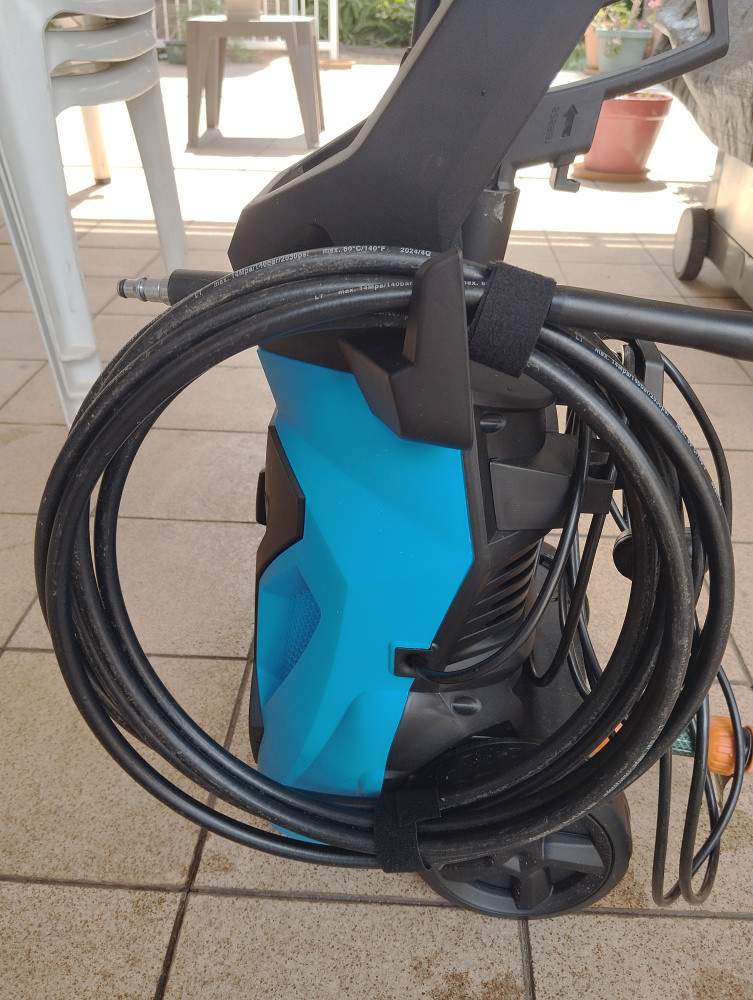
Fig 5a: Hose tied with Velcro
If you don't have double-sided Velcro, two opposing strips of normal Velcro will do the job just as well.
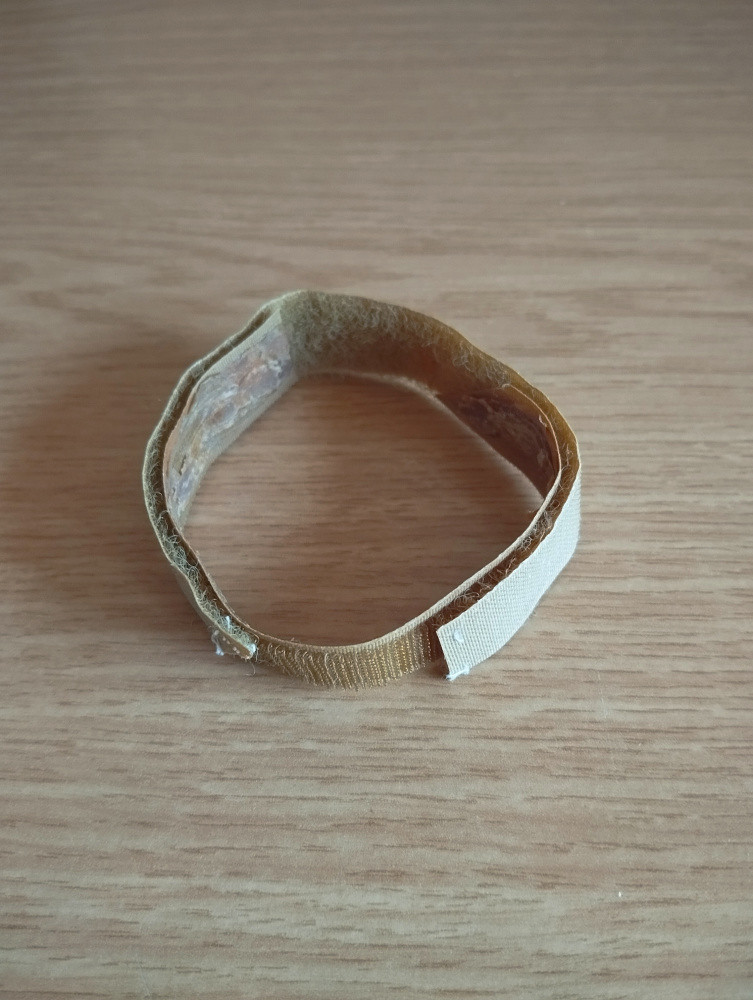
Fig 5b: Normal Velcro as a tie-down
(updated: 25 November 2025)
Useful links
